- Safety
- Sweet Spot (you are here)
- Stop Printing
- Comfort
Finding Your Concealment Sweet Spot
Finding Your Boundaries
Before you can choose your ideal carry position, you'll need to rule out any positions that will be uncomfortable. Comfort is the foundation of concealed carry success. While carrying a gun will never be as comfortable as NOT carrying one, it's crucial to consider comfort from the very beginning of your concealed carry journey.
The first step is to find your body's comfort boundaries. Those are the areas where you can place your holster without interfering with your movement or causing pain. That's what allows you to sit down comfortably while appendix carrying your gun, and do all your normal daily activities, like driving, bending, squatting, or running.
As you'll see in the video below, comfort boundaries are unique to each person, but they're easy to find with a little practice. Pro tip: Find your comfort boundaries when you're sitting down first!
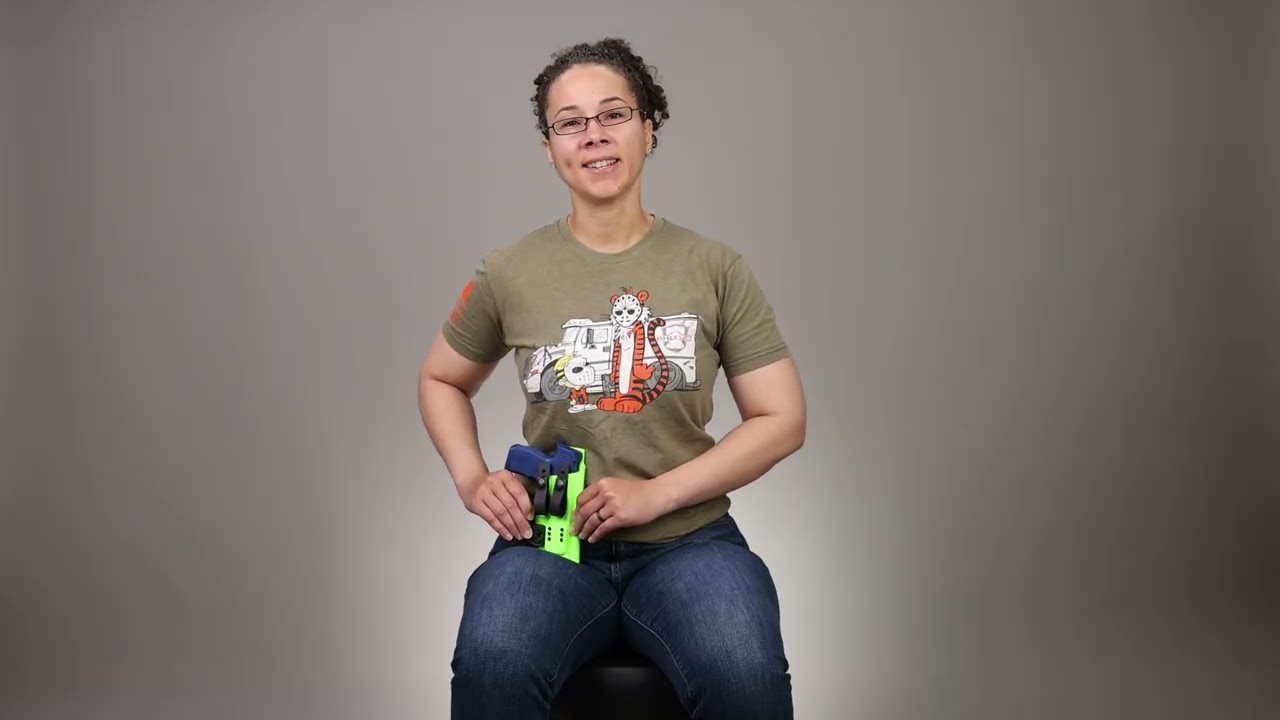
Once you know which carry positions are in-bounds and which are out-of-bounds for your body type, then you can move on to the next section.
Concealment Sweet Spot: Find Your Perfect Carry Position

The next step to getting good concealment is finding your Sweet Spot: the position on your body where the gun best fits. In the upcoming chapters we'll diagnose any printing issues and correct them, so don't worry if it's not perfect yet.
Your concealment Sweet Spot is the best spot on your body to conceal your gun. The ideal carry position will be a little different for everyone.
Finding your Sweet Spot takes some self-assessment. Since all bodies are different, there are no rules to memorize. Two people with the same body type can end up in completely different carry positions, because the variables are so individual: body size, shape, tissue density, wardrobe, gun size, and personal sensitivity. Copying what someone else does rarely works. You need to find the right position for you.
Bodies also change over time, and that's exactly why the process matters more than the answer. The Sweet Spot you find today might need adjustment after running an Ironman, having a baby, or even eating a big lunch. Once you know how to assess your own body, you can adapt to whatever changes come. Investing time in the process pays off for life.
To find your carry position, stand in front of a mirror or record yourself on your phone. You're looking for two things:
- Your body's peaks and valleys.
- Areas where your clothing drapes.
Imagine your body as a landscape: you want to avoid placing the gun on a peak, and instead place it into a valley, where your clothing can drape around it.
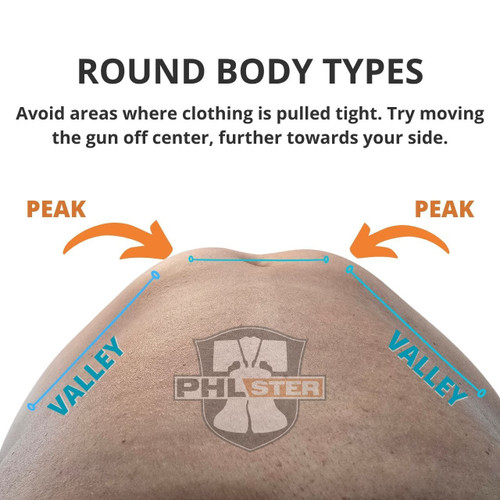
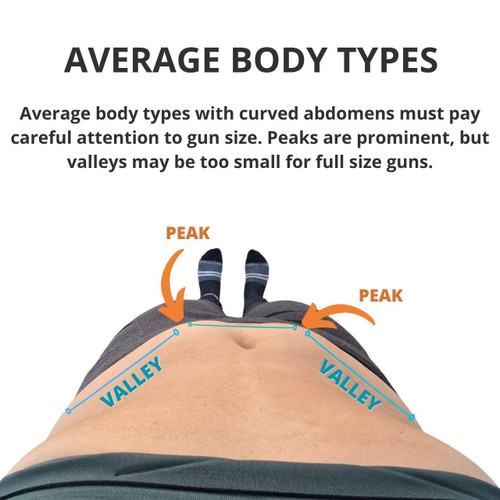
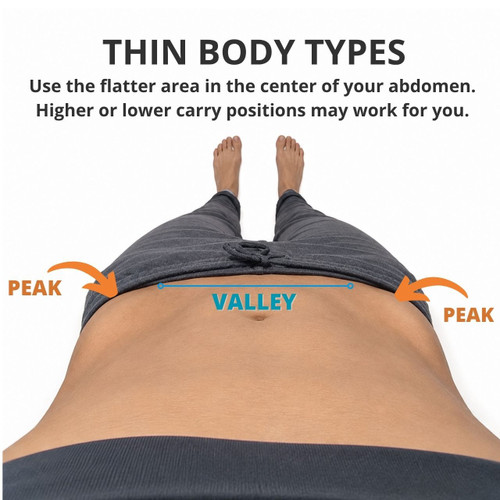
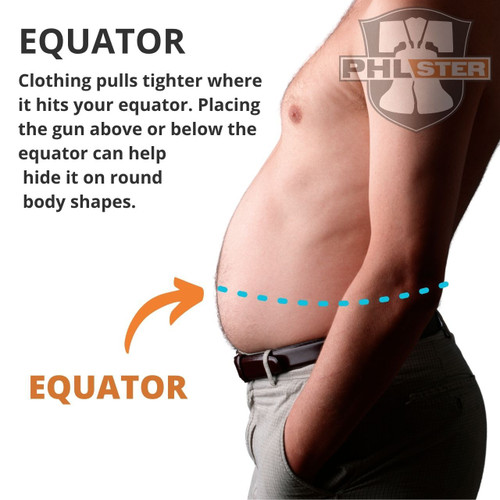
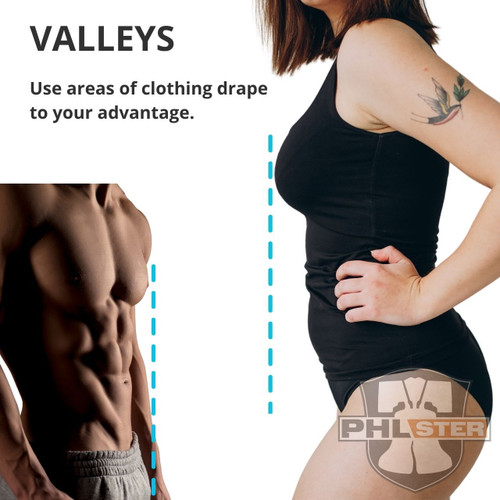
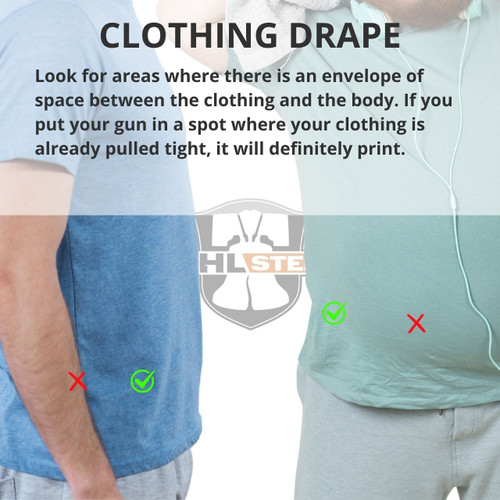
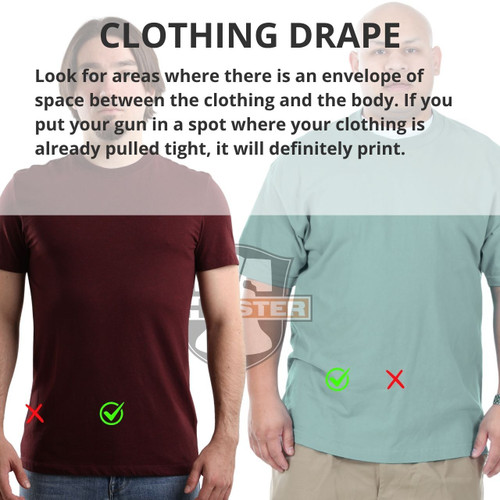
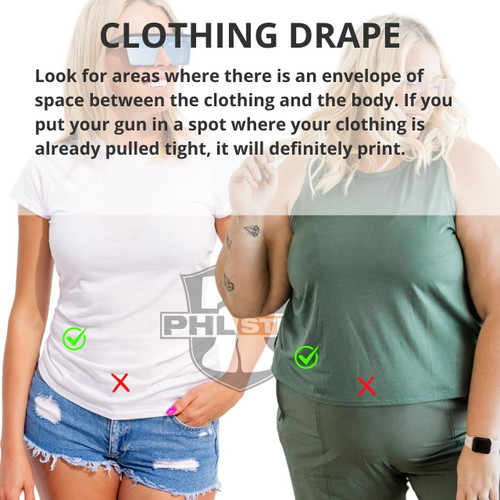
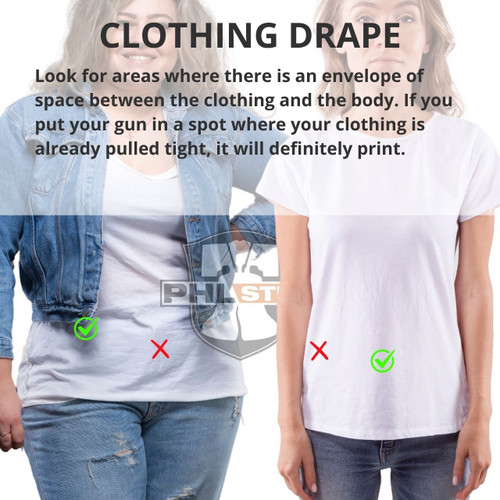
When you're getting started, it's normal to feel like you're all peaks, no valleys. Everyone feels that way at first! But rest assured, you don't have to find a perfectly flat spot on your body to conceal the gun -- all you need is an area that is relatively flatter than the areas around it. An area where your clothing drapes relatively more, allowing for an envelope of empty space between the clothing and your body. Remember, if your clothes are tight or clingy enough to touch your body without a gun, adding a gun in that spot will definitely print. So look for a valley with some natural clothing drape.
As you experiment with positioning, remember that small adjustments can make a big difference. Even a half inch difference in gun placement can be the difference between successful concealment, and printing. Make changes in small increments, and observe the difference before moving on.
If you're struggling with this step, make sure your gun isn't too big for your Sweet Spot by calculating your Concealment Percentage.
Short on time? Skip straight to “Stop Printing” →Strong Side vs Appendix Carry Which carry position is right for you? A quick guide to the tradeoffs.
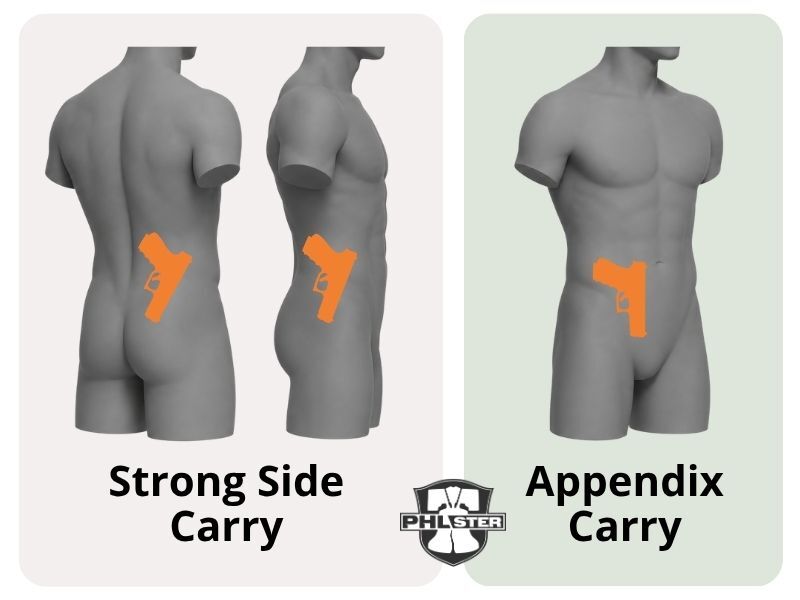
Should you choose a carry position on the back, side, or front of your body?
The two most popular options for concealed carry are called "strong side," with the gun on the same side as your dominant hand (or just behind the hip), and "appendix carry," which means carrying on the front of your body. The position you choose depends on your body shape, personal sensitivity, wardrobe, and concealment needs. Read our strong side deep dive, or see the quick tips below.
Choose appendix carry if you:
- Need good-to-excellent concealment
- Live an active lifestyle where you are frequently reaching, bending, or are in close physical proximity to others
- Don't wear multiple layers of structured clothing
- Face higher consequences for getting made
- Have the patience to dial in your setup
Choose strong side carry if you:
- Typically wear at least one outer layer of cover garments in all weather, such as a vest or suit coat
- Don't need to worry about social, legal, or career consequences if your gun is spotted
- Don't have time or energy for a lot of fine tuning
- Have body type or medical considerations that make appendix carry too difficult
Your body will be your guide. Choose the carry position where your gun best fits into your Sweet Spot. But generally speaking, almost everyone will get better concealment with appendix carry, though it's more work to get right. Neither is wrong, as long as you understand the tradeoffs.
How Body Type Affects Concealment
When talking about body types, we must make broad generalizations. And the trouble with broad generalizations is that they're often wrong for individuals. That's why the process-oriented approach above is better than just memorizing a list of tips for your body type.
It's less important to focus on your gender or size, and more important to focus on where your clothing tends to drape. You could take two people with a rounded, or "apple-shaped" body type, and they could have peaks and valleys in completely different places. One approach definitely does not fit all. That said, some patterns emerge when we look at people who are successful at concealed carry.
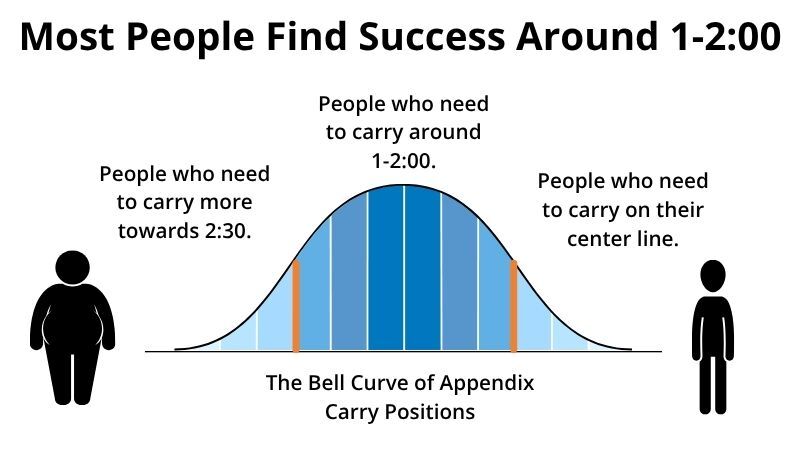
Rounder body types
Rounder body types tend to have less clothing drape at the waist and a pronounced center peak. So carrying right on the center line is usually a bad idea. A position further toward 2:00 or 2:30 helps get the gun off the peak, and in conjunction with a holster wedge, can give great results. Having some extra soft tissue can often make concealment easier, since the gun tends to sink into the body, requiring less clothing drape to conceal it. On the flip side, this body type often struggles with pants that sit too low, or belts cinched too tight to keep them up. Both make concealment harder. Read our full guide to carrying for bigger folks.
Thinner body types
Thinner body types often find their best valley directly on their center line, or even slightly across it. Sometimes thin folks can carry surprisingly large guns (although they often must alter or size up their wardrobes to create more clothing drape). However, when thin folks have anterior pelvic tilt or an arched back (when the belly button is the furthest point forward), they can struggle even with the smallest guns. Because they don't have much soft tissue for the gun to sink into, the entire thickness of the gun stands out from the body, causing a 'shelf' effect where clothing hangs up and prints.
If your gun is proportionally large on you, see our full video guide here.
Medium and curved body types
Medium and curved body types frequently struggle with larger guns. Even though they're physically larger than small folks, because their peaks tend to be more pronounced, they may run out of space in any given valley. They may or may not have as much forgiving soft tissue for the gun to sink into (read our full Muffin Top guide here). Medium body types benefit from careful gun choices and lots of attention paid to clothing cut and style.
BIGGER FOLKS: Our top tips and guides Skip the guesswork and get great concealment at any size with our collection of knowledge.
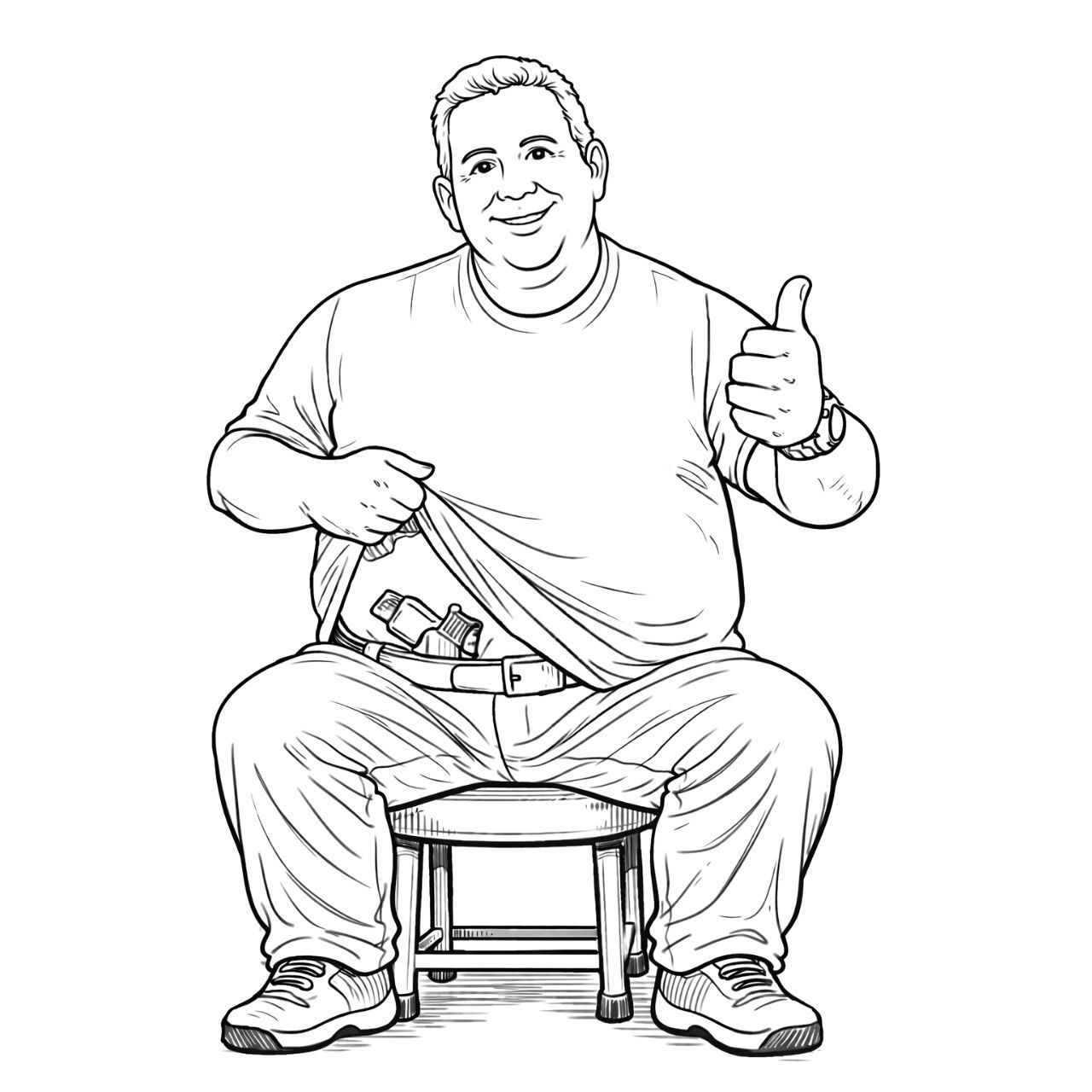
The number one issue most bigger folks struggle with is comfort. And the number one reason (for men) is because they wear their pants too low. If you'd like to save yourself a lot of time reading, stop right now, pull your pants all the way up to your natural waist, and try concealed carry again.
Of course, there are a lot more details to master than that! But that's the number one problem we help folks solve. For a detailed guide on carrying on larger body types, check out our "Carrying For Big Guys" deep dive. It covers our top tips for carrying on larger body types, including:
- How to find the correct ride height and carry position
- How to use a holster wedge to improve comfort
- Why you should avoid rigid belts
- The counterintuitive reason longer holsters are more comfortable than shorter ones
Men vs Women - Different Concealment Needs? What's different for men's vs women's concealment?
First, a few universal truths. 1. The concealment mechanics principles are the same for everyone. 2. The process we teach for getting good concealment is the same for everyone. 3. There are wide variations in body types among and between genders.
With that out of the way, the basics are the same, but there are a few differences worth noting. The main one is that women's clothing tends to be cut closer to the body, with thinner, less forgiving fabrics, and frequently does not support belts. As a result, women often struggle with printing even with a good holster setup. And unfortunately, because so much of women's clothing doesn't come with belt loops, women frequently struggle with holsters that clip to the clothing, belly bands, and other suboptimal solutions. While holster brand doesn't matter, it IS essential to use a holster system that allows you to apply all the concealment mechanics you'll learn in this series correctly for your body type, because every little bit of advantage matters.
The second difference between men and women is the density of body fat. You could take a man and woman with the same silhouette, but they would need to apply the concealment mechanics slightly differently, because women tend to have softer fatty tissue than men.
Ultimately, there is no simple recipe for a "women's holster." The individual nature of bodies means there's just as much variation within a gender as there is between them. A process-oriented approach is key. Anyone who tells you otherwise is probably trying to sell you something.
MEN: Tips for Male Body Types Tips and observations from helping thousands of male body types get successful concealment.
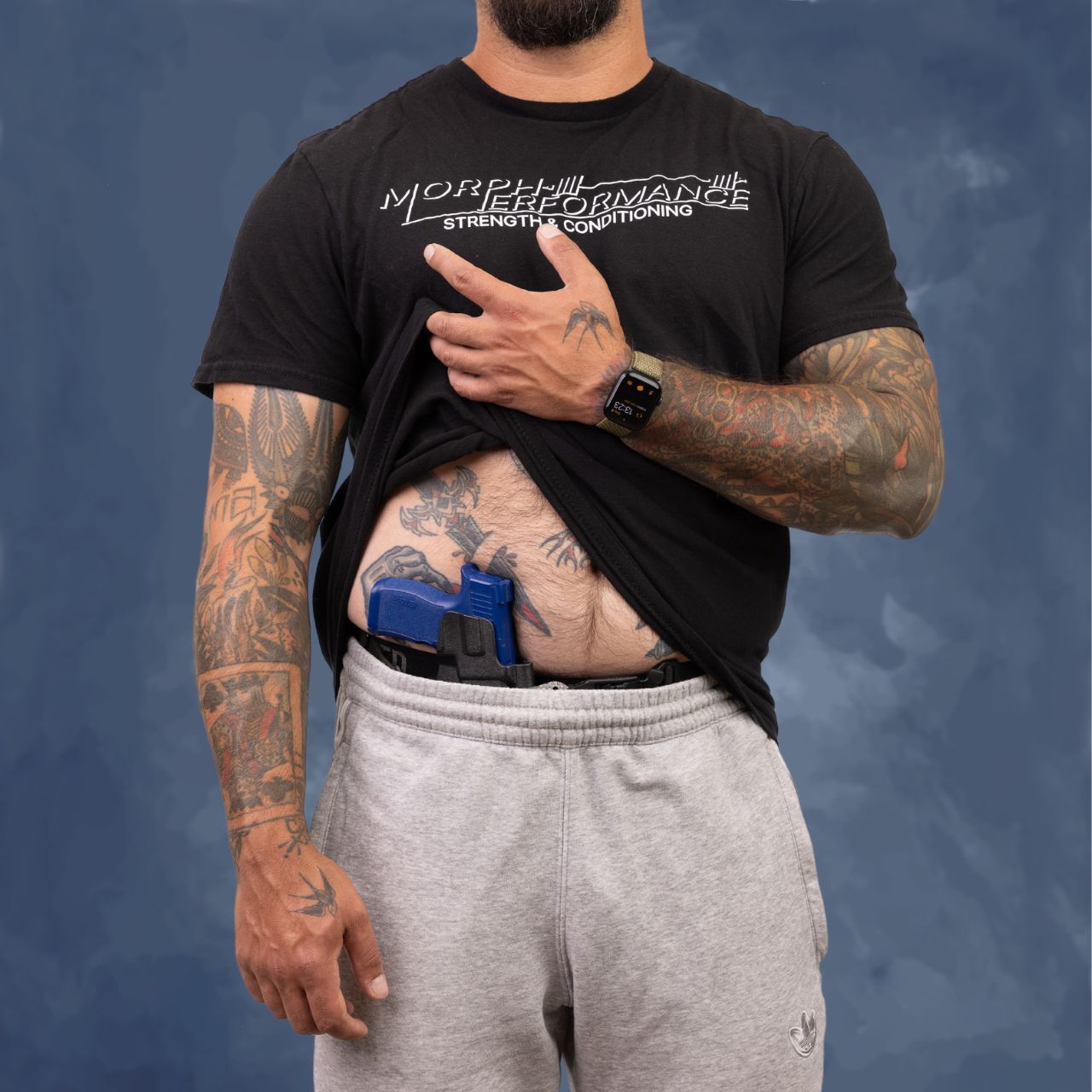
As we discussed above, the best tip we can give you is to use a process-oriented approach toward finding the best carry position for YOUR body. There's no shortcut for knowing what works for your individual needs. But you're here looking for patterns, and we're here to share what we've observed over the last 15 years of holster making and concealment education.
Our top tips for men's carry positions:
- Pull your pants up. The number one problem men face is comfort-related, caused by wearing the holster too low. Take a look at the "boundaries" video at the very top of this chapter. If your pants ride height places your holster out of bounds, either wear higher rise pants, or use a holster that doesn't attach to your pants belt.
- Look for areas where your clothing drapes down from your pecs or shoulders, leaving an envelope of space between the clothing and the body. (Round body types, see our carry guide for big guys.)
- If you carry a spare magazine, place the gun in your sweet spot first, then follow the same process to place the magazine in your sweet spot on the other side. Don't automatically assume the holster and magazine should be right next to each other. That doesn't work for most people.
- You may be tempted to mod your gun. That's totally fine. You should enjoy your gun and shooting experience. However, keep in mind that certain mods will make your gun harder to conceal and harder to live with on a daily basis. That limits your options when it comes to choosing the most concealable carry position. Detrimental mods include:
- Flared magazine wells add bulk to the part of the gun that's already pointiest and hardest to conceal.
- Aftermarket frames make it harder to find holsters.
- "Gas pedals" or thumb rests add bulk to the frame and complicate holster choice.
WOMEN: Tips for Female Body Types Special considerations for women's concealed carry.
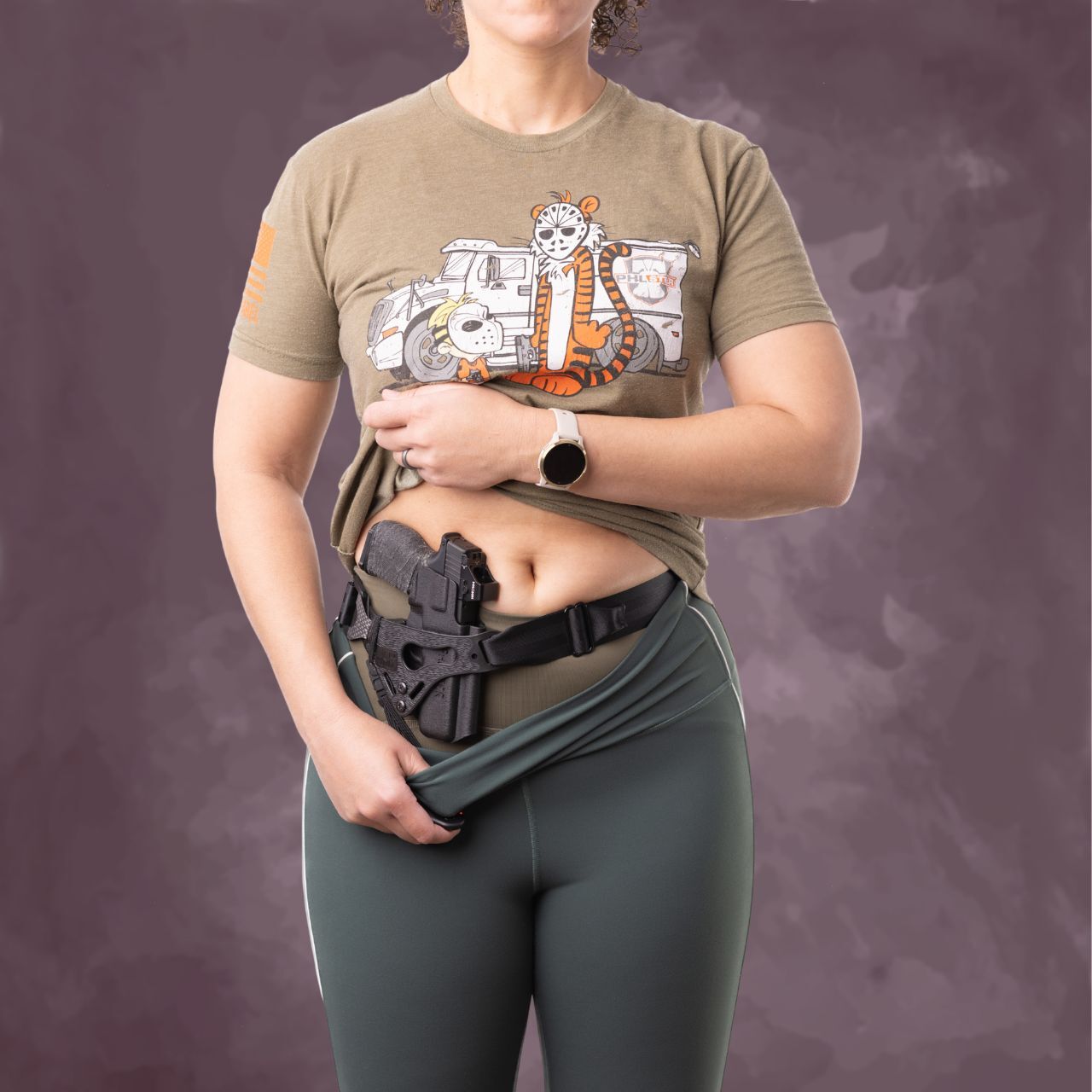
As we discussed above, the best tip we can give you is to use a process-oriented approach toward finding the best carry position for YOUR body. There's no shortcut for knowing what works for your individual needs. But we get it. You're here looking for patterns. And we're here to share what we've observed over the last 15 years of holster making and concealment education.
Let's start with some realistic expectations. With thoughtful gun choices (and attention to the concealment percentage principle), most women do not need to "dress around the gun" very much to get acceptable concealment. You may be surprised how well concealed carry fits into your normal lifestyle and wardrobe. However, your degree of success depends on where you start from. If you prefer tight-fitting, figure-hugging clothing, you will simply not have room to fit a gun between your body and your clothing without printing. This is especially true if you're small-statured. So a little common sense is required. If your body is only 6" thick from front to back, and you place a 1.5" thick gun on it, that's a 25% difference. You'll notice it. That's just physics. On the flip side, if you prefer flowing styles and more relaxed fits, you'll probably find concealment easy.
The vast majority of women are able to carry their firearm on-body by a) paying careful attention to the Concealment Mechanics you will learn in this series, and b) making some minor accommodations to their wardrobes. Luckily, the holster industry has advanced to the point where you no longer have to dress like a man to carry a gun. It's possible to be stylish and carry, with a little creativity and effort.
Our top tips for women's carry positions:
- Many women's body types have very little available clothing drape at the waist and hip. Be prepared to carry higher or lower than your waistband.
- Strong side carry rarely works well for curvy body shapes, and requires heavy cover garments to maintain good concealment (more info on strong side carry here). Consider appendix carry (forward of the hip bones) instead.
- If your typical clothing style doesn't have enough drape to hide a gun, here are your options:
- Make small style tweaks designed to increase clothing envelope, such as tucking your shirt, changing to more structured fabrics, or choosing different cuts. Even something as simple as wearing a push-up bra can help increase your available drape.
- Consider trying a thinner or smaller gun (smaller guns are harder to shoot, so be prepared to increase your training).
- If higher carry positions don't work for you, consider deep carry.
- Join the Concealment Workshop Community to talk concealment, ask questions, and see what others with similar body types are doing.
→ Concealed Carry for Plus Size Women → How to Concealed Carry in a Dress → Muffin Top: How to Fix It → Gun Dick: Printing Below the Belt Line
I can't find my sweet spot, can you help? What if you've watched all the videos, but still aren't sure what the best carry position is for you?
Of course we can help! Here are some options.
Join the community
Chat with people like you in the PHLster Concealment Workshop. See pictures, ask questions, and get advice from others with similar struggles. You do NOT need to own PHLster products to participate.
Join our free Enigma Tuneup zoom class
Get live video coaching from our experts. Sign up for a Tuneup session. Note: The Enigma Tuneup class is specific to the PHLster Enigma. Anyone can join the class as a viewer and watch for free, but participation requires a correctly assembled Enigma.
Ask Phil
Phil is our digital librarian. Hooked up to all our best concealment information, he can help you find articles and videos that may relate to your problem. Ask Phil a question.
Contact support
We're always happy to answer questions! Contact us.