
Find Your Concealment Percentage
The size of your gun relative to your body matters as much as your holster setup. This calculator tells you what percentage of your available hip-to-hip space your gun occupies — and what that means for your concealment.
How to Take Your Measurements
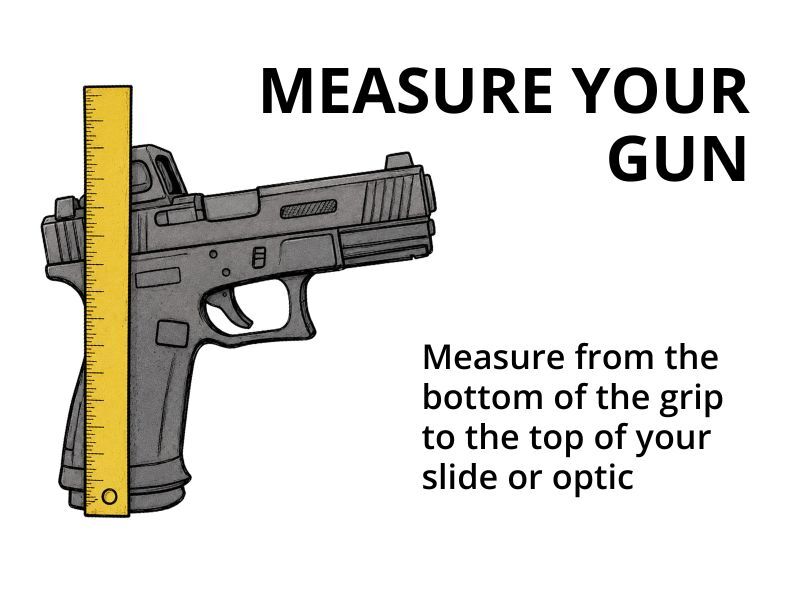
Gun Height
Measure your gun from the bottom of the magazine to the top of the slide. If your gun has an optic mounted, measure to the top of the optic instead. Record in inches.

Hip-to-Hip Distance
Place your hands on your hip bones. Measure across the front of your body from one hip bone to the other. Record in inches.
Calculate
Your Result
Range Reference
| Range | What it means |
|---|---|
| 40% or below | Optimal concealment — your gun fits well within your available space |
| 41% – 55% | Greater challenge — good concealment requires more intentional setup |
| Over 55% | Concealment hard mode — every part of your setup needs to work together |
These ranges give you an approximate guide to how difficult your gun will be to conceal. But they don't factor in gun thickness, holster setup, or additional gun accessories that may affect concealment, such as magazine wells. So keep in mind this is a quick reference only, and your results may vary.
Origin of the Concept
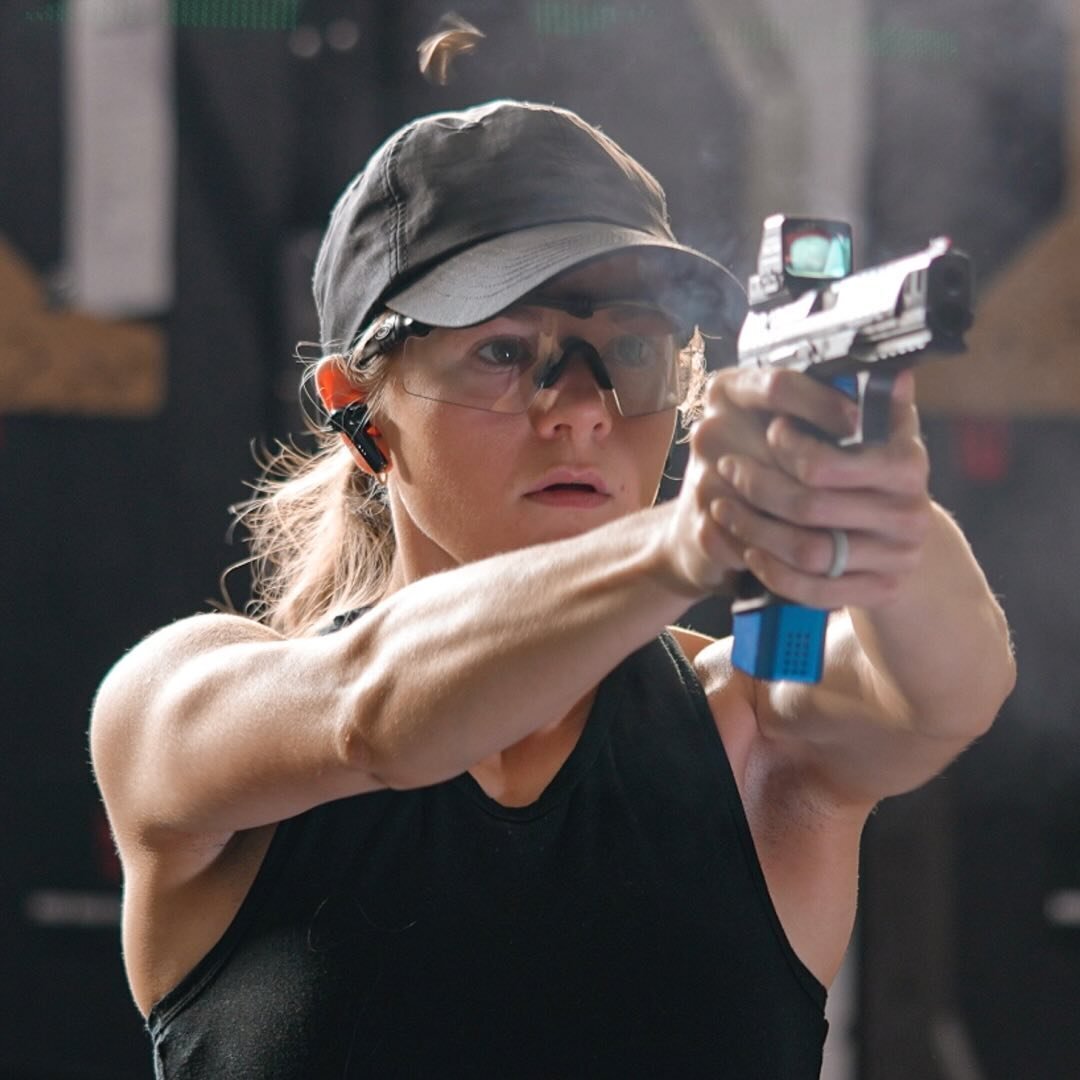
The Concealment Percentage Principle originated with Tessah Booth, who noticed something unexpected while comparing carry setups with her husband. He was carrying a Glock 34; she was carrying a Glock 48 with an optic. Despite the Glock 48 being the smaller gun, it looked proportionally larger on her petite frame than his Glock 34 did on his. So they measured.
The math confirmed it. The Glock 48 occupied more than 60% of Tessah’s hip-to-hip distance. Her husband’s Glock 34 — on a 5’10”, 175 lb frame — took up about 50% of his. The smaller gun was actually more challenging for her to conceal than the larger gun was for him. The absolute sizes of the guns didn’t matter — it was the percentage that was important.
Tessah took the idea further, developing a concealment study and polling members of concealment-focused Facebook groups and her Instagram followers to gather data across different body types and firearms. The study results were difficult to analyze cleanly, but the underlying principle held up well enough to publish — so she did, specifically so that anyone could apply it to their own setup.
Building on Tessah’s research and early polling through the PHLster Concealment Workshop on Facebook, PHLster helped refine the percentage ranges you see in this calculator. The principle is simple, the math takes about 30 seconds, and it can save you from buying a gun that works against your body instead of with it.
What's Next?
Now that you know your concealment percentage, put that number to work. Learn PHLster's Concealment Mechanics process for turning it into real, comfortable concealment.
Learn Concealment Mechanics