
Sep 9th 2025
Updated August 18, 2026 · by Jon Hauptman
Best Beltless Holsters for Concealed Carry
Updated for 2026
Beltless concealed carry (or beltless holster) refers to a concealed carry system for carrying a pistol without attaching a regular holster to a regular pants belt. The best beltless holster meets ALL of the safe holster criteria: protects the trigger, securely retains the gun in the holster, securely retains the holster to the body, and allows for safe re-holstering.
Additionally, some body types are not shaped for good concealment when the gun sits at the natural waistline. Incorrect gun placement is the number one cause of printing and other concealment struggles. That’s where beltless holsters excel: they provide secure retention, discreet concealment, and complete freedom to position the gun where it fits your body best, not just where your pants happen to ride.
In this guide, we’ll discuss some of the most important considerations for beltless concealed carry, including a breakdown of each holster type and its pros and cons, carry position, and how to choose the best holster for the clothing you actually wear.
Bias statement: At PHLster, we do not review competitors' products due to an inherent conflict of interest. Naturally, we think our products are the best, so we don't do reviews or comparisons. But what we can do fairly is education. We'll teach you about the types of beltless holsters, how to use them safely, and how to make an intelligent choice based on understanding your own needs rather than simply trusting a company's marketing hype.
Types of Beltless Holsters
Belly Band
Some people use “belly band” to mean any holster they wear under their clothes, but it’s actually a lot more specific than that. A belly band is typically a soft, unstructured holster that is worn independently. However there are several other categories of holster that perform the same function, and it may turn out that the “best” bellyband for you may not actually be a belly band at all.
A typical belly band holster is made out of elastic or neoprene, and often fastens with Velcro. There are many different designs, most of which feature a relatively unstructured pouch to hold the gun. While these may seem appealing because they fit multiple guns, they frequently lack trigger protection and positive retention features, so they must be evaluated carefully for safety on a per-case basis.
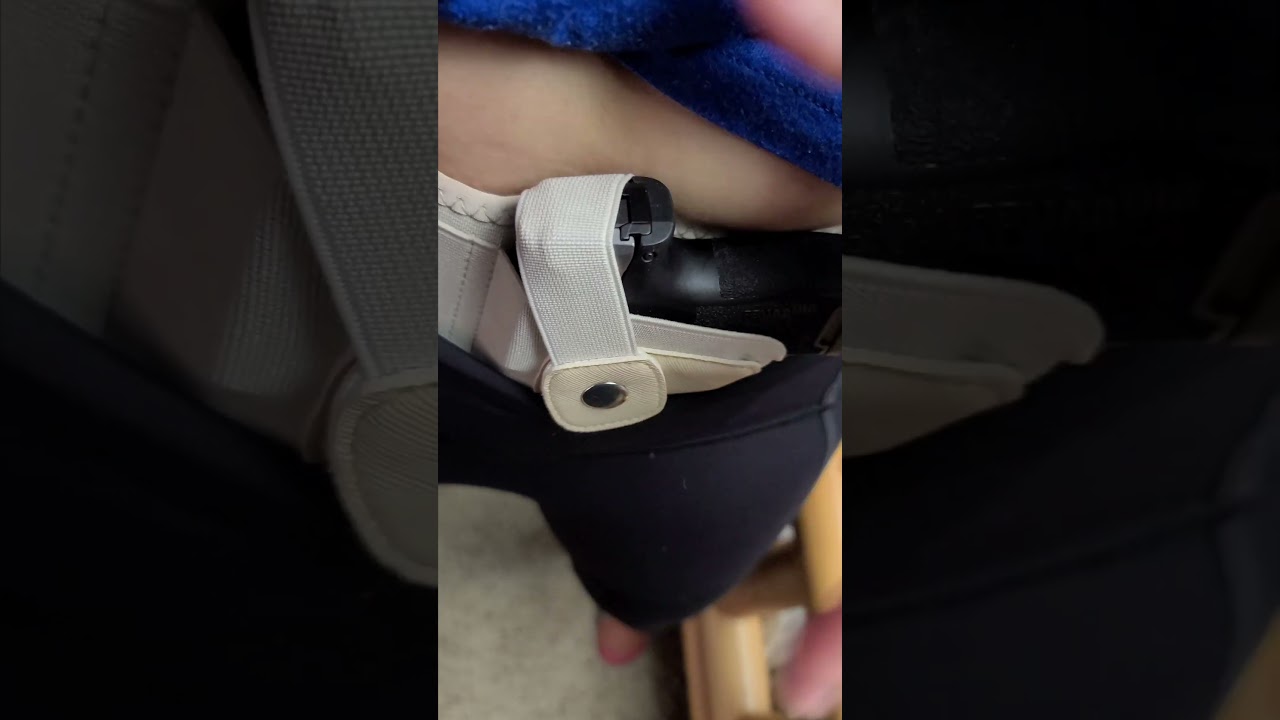
Many belly band holsters come with a rigid section that is supposed to protect the trigger. However, most of these are easily defeated, as you can see in the video above. It’s up to you to test your holster for safety, and you should take this responsibility seriously.
When using a soft or unstructured holster, it’s best practice to use a Kydex trigger guard, or better yet, use a complete Kydex belt holster that you can securely attach inside the belly band. This should be formed to fit your specific gun, and it should provide complete trigger protection, as well as retention.
With the addition of properly molded trigger protection, many belly band holsters can be made safer. They can be one of the most affordable types of beltless holster (be sure to factor in the cost of modifications) and frequently have wide bands that distribute weight well and minimize pressure points.
The key to concealment with a belly band holster is to position the gun in your concealment sweet spot. Since soft holsters don’t work well with concealment features such as wings and wedges, your best strategy will be carrying in the right place for your body type, and dressing around the gun.
- Affordable
- Comfortable
- Simple
- Most don’t come with molded trigger protection
- Most are unsafe without modification
- May have a limited adjustment range
- Can be warm in hot climates
- More printing due to lack of concealment-enhancing features
Sub Belt - Wearing a Belt and Holster Under Your Clothes
A “sub belt” just means wearing a belt under your clothes, and it’s a time-honored method of carrying without a pants belt. It does not require a specialized belt (although there are many specialized options on the market). To try it, grab a belt out of your closet, put it on under your clothes, and clip your regular IWB (inside-the-waistband) holster to it.
Sub belts are best for guns with plenty of keel, meaning holsters which are longer below the belt line to help balance the gun and prevent tipping. You’ll need an IWB holster with sturdy clips. You’ll also need a way to keep the holster down when you draw the gun, otherwise the motion of pulling the gun up and out of the holster may pull the entire belt up your body. Other beltless carry systems like our Enigma accomplish this function with a leg leash, which fastens around the thigh and holds the holster down on the draw.
Sub belts are a great way to try out beltless carry before you invest in a specialized system. They allow you to try different concealment sweet spots, so you can determine whether you need to carry higher or lower than your pants waistline.
The downside is they are not always the most stable, and the concealment potential can be limited. Since they rely on belts and regular holster clips, they are limited to the performance potential of those items. For most people, this isn’t a major issue, as conventional carry is good enough. But for users who need high level concealment, especially those with challenging body types, the limitations of sub belts will become obvious over time.
- Affordable
- Easy to use
- Works with most holster types
- Works with the concealment features of your IWB holster
- Proven track record over decades of use
- Safe (when used with a safe holster)
- Low performance ceiling, since they are shaped like a pants belt
- May require adding a leg leash to improve draw
- May not be stable on all body types
- Holster may slide on belt
- Holster clips can add bulk under clothing
Enigma
The Enigma is a concealment system that is worn independently of your clothes. It consists of a Kydex holster, an integrated belt, and a specialized faceplate. A leg leash fastens around the upper thigh and stabilizes the holster when you draw.
The Enigma’s components were all designed from the ground up to give you full control over your level of concealment. It uses specialized technology, which makes it conceal better than almost any other beltless option, HOWEVER, that does not mean it’s the “best” holster, or that it’s right for you.
The Enigma is best for people with high-level concealment standards, people with difficult body types, or those with active lifestyles. With so many options and adjustments, it takes time to dial it in for your body. If you’re looking for a simpler solution and you don’t mind a little printing, the Enigma will be overkill for you. A sub belt or bellyband will be good enough with less effort and expense.
The Enigma allows for deep carry, which is especially helpful for challenging situations like tailored business suits, tucked shirts, and for body types that struggle with printing when carrying above the waistband.
- Best concealment
- Fast draw
- Stable, rugged
- Safe kydex holster
- Adjustable, customizable
- Comfortable (with correct setup)
- Best for difficult body types
- Expensive
- You will need to understand the Concealment Mechanics to unlock its full potential
- Some models require complicated assembly steps
- Some models only work with proprietary holsters
- Optional accessories add cost
- Not suited for people who need to take their holster off multiple times per day, such as to go in and out of restricted areas
- Can be overwhelming for beginners
Bra Holsters
Bra holsters are often thought of as special occasion holsters, like for when you need to carry your gun in a ball gown or at a wedding. But they can also be a viable option for everyday carry in normal clothes. They make carry possible for many people who are unable to carry on their waist due to surgical scars or medical conditions.
As the name implies, bra holsters attach to your bra. They require a sturdy bra which fits correctly. When adjusted properly, they’re a secure and comfortable option.
The downside of bra holsters is that they require, well, a bra. (Sorry, gentlemen.) For obvious reasons, they work best with small, lightweight guns. They also require some attention to proper draw and reholstering technique to use safely. But for those willing to put in the work, they are a valuable addition to your concealed carry toolkit.
- Takes advantage of natural clothing drape for concealment
- Works for extremely challenging outfits, such as bodycon dresses
- Keeps the gun off the waistband, which is helpful for medical conditions
- Women only
- Requires a sturdy, well-fitted bra
- Limited to lightweight guns
- Requires attention to safe draw technique
Ulticlips, Fabriclips, Friction Holsters, and Concealed Carry Clothing
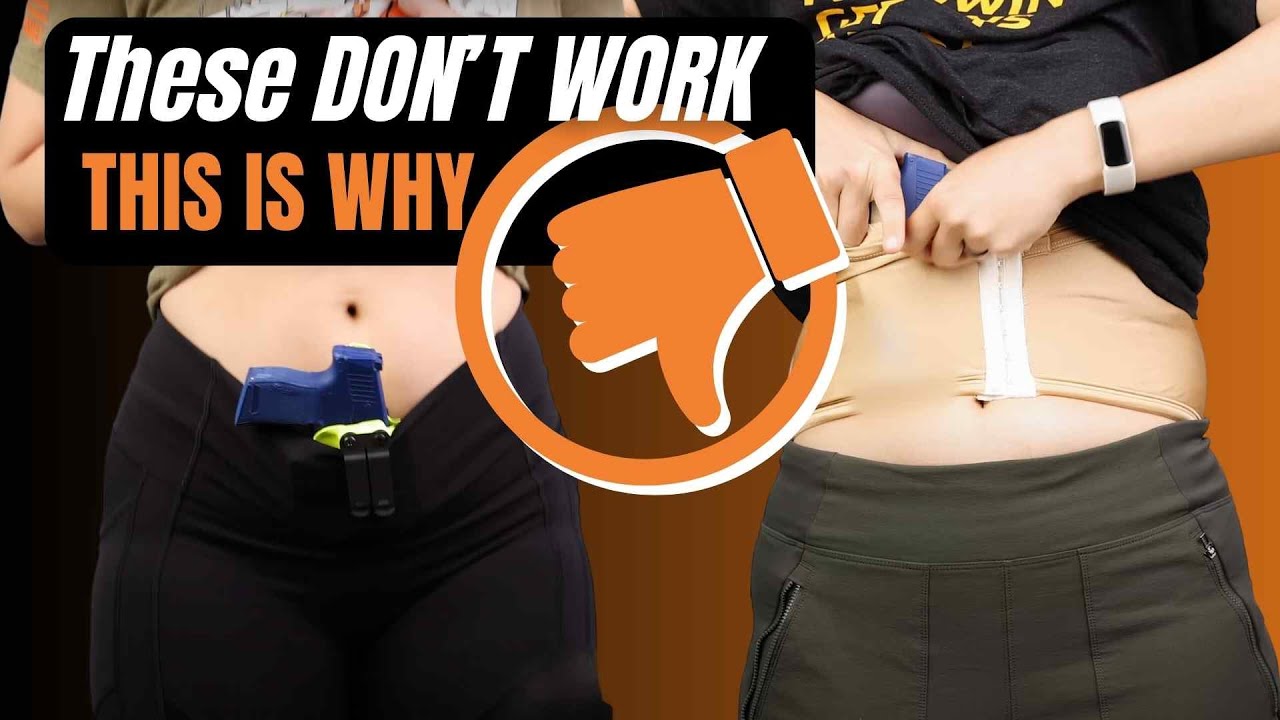
There are many holsters and clips on the market today which are designed to clip directly to your clothing. These promise effortless concealment in your regular clothes, and sometimes that actually works, if the clothing is structured enough. But if you’re tempted to clip a holster to your gym shorts or leggings, make sure you understand the tradeoffs first.
Most clothing is not designed to support the weight of a loaded gun in a holster. In addition to poor concealment, this presents a real safety risk. Retaining your holster during a fight for your life will rely on the integrity of a few layers of fabric and some garment weight thread.
If you still want to clip a holster to your clothes, I’d highly recommend picking up a slim, cheap nylon belt on Amazon, wearing that under your clothes (see “sub belt” section above), and clipping the holster to both the belt and the clothing. That way you can still have a safe platform for your holster, which won’t rip off if a bad guy grabs you. The belt will also help your holster’s concealment features to work better, and help retain your gun securely if you need to sprint, jump, or roll.
Fabriclips are a flexible plastic clip that is designed to grab fabrics. These may pop off under pressure, and they are not suitable for carrying a loaded firearm on your person. They are better suited for accessory items which would not pose a safety risk if dropped or snatched.
Friction holsters are not actually anchored to your body at all - they are inserted into your clothing, with the expectation that friction alone will keep them in place. Because these holsters do not have any mechanism for safe retention, they fail our three part safe holster evaluation. They should not be used for carrying your firearm IWB (inside your waistband). They are acceptable to use as pocket holsters or to store guns at home in your safe or gun bag.
Carry Position: Appendix (AIWB) vs. Strong Side
Generally speaking, you should choose your carry position based on your body shape and wardrobe, and keep it consistent whether you’re using a gun belt or going beltless. Your body type will dictate which carry positions are most comfortable and conceal the best (find your ideal carry position here).
That said, carry position does matter when it comes to choosing a beltless holster. The best holsters for AIWB (appendix carry inside the waistband) may not work well for strong side, and vice versa. Also, don’t be tempted by holsters that promise to work well for multiple carry positions - purpose-built holsters work better than multipurpose ones. It’s a false economy to buy a product that promises multiple functions, but isn’t that great at any of them.
Strong Side
Strong side carry is relatively straightforward and requires few dedicated concealment features. Choose a holster, bellyband, or sub belt that allows you to adjust the forward cant of your holster. This helps with concealment, and allows for easier draw access without having to cock your wrist. Most strong side holsters don’t require wings or wedges. However, if your holster is printing because the grip has rotated away from your body, adding a wing can help.
The downside of strong side carry with beltless holsters is that the unbalanced weight can pull the holster down on one side. This is less of a concern with belly bands, since they distribute weight over a wider area. But if you’re using a sub belt, you may find it becomes annoying throughout the day if it sits higher on one side than the other. Look for a system with a more structured belt and good weight distribution.
Appendix Carry Holsters
Appendix carry (often abbreviated AIWB) requires specialized concealment features on the holster to get optimal results. Just slapping a strong side holster against your belly will not conceal well, and will leave most people with uncomfortable hot spots and glum feelings about their bodies. This is where purpose-built holsters really shine. The best holsters for appendix carry are designed to rotate and tilt the grip of the gun toward your body, which decreases printing and increases comfort. Ideally, a good AIWB holster will also have a range of possible adjustments, so that you can customize it to fit your body type. We have extensive guides on how to get the best possible concealment with an appendix carry holster, regardless of brand. Education is our specialty here at PHLster, and that’s where you will find the most gains.
One thing to keep in mind is that all appendix carry holsters require belt pressure to activate their concealment features and achieve good concealment. Soft or unstructured holsters won’t cut it here. Pressure across the face of the holster is what helps it tuck and rotate for good concealment. But that doesn’t necessarily require a traditional gunbelt. A sub belt or Enigma can also provide the necessary pressure. Sub belts can work well for most body types, with some caveats, as we discussed above. People with challenging body types or high-level concealment standards will do best with the fine-tuned control offered by the Enigma.
If you’ve read this entire article, by now you’ve noticed a common theme. The “best” holster for appendix carry doesn’t actually exist. All holsters have pros and cons, acceptable tradeoffs and dealbreakers. So what is the best holster for you? The one you choose with an educated eye. Determine your concealment percentage, then find your concealment sweet spot. Those two things together will do more work to get you to the best solution than any listicle, influencer, or hypebeast marketer. The process is simple. Put in the work, get good results.
Best Holster Choices for Specific Clothing Types
Gym Shorts
Gym shorts are typically made of loose-fitting athletic or technical fabrics. Gym shorts may have a drawstring, however clipping a holster directly to the shorts means the weight of the gun is distributed across a shoestring-thin piece of material. That gets uncomfortable over time, especially on longer days or longer runs. A sub belt, bellyband, or Enigma can all work well with shorts, with the tradeoffs discussed above.
If you’re jogging shirtless, or if you have a body type that tends to print at the waistline, consider deep carry (carrying below the waistband). For that, the Enigma gives you the fastest draw speed. Other options such as pouch-style belly bands can also work, although they are slower to access.
Scrubs
Choosing a holster for carrying in scrubs is tricky. Not only do you face the same challenges as other unstructured clothing types, you also have the added pressure of carrying at work. We have a comprehensive guide to concealed carry in scrubs which covers all aspects of this challenge. I recommend using this deep dive to walk through the obstacles before you start.
Sweatpants
Sweatpants tend to be made of thicker fabrics than gym shorts, however they can be tricky to carry in because they’re often more form-fitting. They rarely have patterns or texture that would help disguise printing.
Like gym shorts, they frequently have drawstrings, and the same caveats apply. If your drawstring is tight enough to retain your gun securely, it’s likely to get uncomfortable over a longer time period. That means divorcing the gun from the pants is important. Sub belts, bellybands, and the Enigma all accomplish this. The best one for your needs will depend on your body type and concealment standards.
Leggings
Form fitting and stretchy, leggings present one of the more significant challenges for women’s concealed carry. When it comes to printing below the beltline (jokingly called “gun dick”), leggings are the least forgiving of poor concealment.
At the same time, they also have some advantages. If your holster ride height is such that the fabric of the leggings lays over the gun, the extra compression can help press the gun into your body. This provides some advantage in smoothing the holster and preventing your shirt from hanging up on it. Note that leggings alone do not provide enough structure to safely retain and conceal your gun without help. For safety, you’ll want to use a sub belt or Enigma underneath.
For best results, look for a holster system that has the appendix carry concealment features we discussed above, and can apply pressure to the outside face of the holster. This is what keeps it from tipping out over your waistband. For a deeper dive on using the PHLster Enigma with leggings, see our leggings guide video.
Professional Attire - Suits, Tucked Shirts, and Business Casual
In a professional environment, you’ll want to avoid obvious tells such as clips that are visible on the outside of your waistband. Also keep in mind that a tucked-in shirt should look smooth and uninterrupted, not lopsided or pinched. So stay away from holster clips that make you cram the fabric behind them. Beltless carry is the obvious choice for this scenario. Since the entire holster is separate from your waistband, you can tuck your shirt freely without trying to work around clips. It also allows you to wear a normal pants belt over the top that’s suitable for your profession, rather than a gun belt that may look out of place.
Belly bands rarely work well for professional attire, unless you’re able to wear looser, bloused shirts (or a blazer which you never take off). Tailored, slim fitting clothing calls for a higher level of concealment standards. Look for a more structured holster with adjustable concealment features, and consider your gun choice carefully. This is not usually the right environment for large, light bearing holsters or protruding gun features like magazine wells or thumb rests. Keep the gun minimal and be ready to use all your best concealment skills.