PHLster Concealment Class - 2023
Posted by Sarah on Mar 17th 2023
Use your phone or tablet to navigate to: phlsterholsters.com/class
Posted by Sarah on Mar 17th 2023
Use your phone or tablet to navigate to: phlsterholsters.com/class
This page accompanies the 2023 PHLster Holsters concealment class. Follow along with the class presentation, or refer back to this page as a memory aid and resource. While this page is public, it\\u2019s not really designed for standalone teaching, so if you\\u2019d like to share this information with your friends and students who aren\\u2019t at class, please link them to the Basics of Concealment Mechanics page or the Concealment Mechanics section of our YouTube channel instead.
You can also download a PDF ebook of the Concealment Mechanics here. You are free to use this in your own classes and distribute it to your students \\u2013 please credit PHLster Holsters.
Thank you!
\\r \\r \\r \\r \\r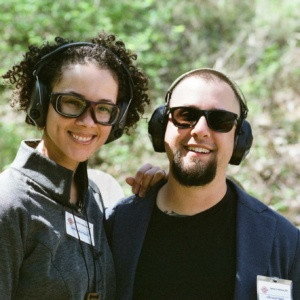 \\r
\\r
\\r
\\r
\\r
\\r
Jon and Sarah Hauptman, owners of PHLster holsters.
In addition to making cutting edge concealment gear, Jon and Sarah have helped thousands of people to improve their concealment. They share the lessons they\\u2019ve learned in their Concealment Tuneup class, as well as on their website, in the PHLster Concealment Workshop facebook group, on Instagram, and on their YouTube channel.
\\r \\r \\r \\r \\r \\r \\r \\rThe foundation of good concealment is the holster. Whatever else the holster does, it HAS to meet these minimum safety requirements first.
Teaching points: Help your students recognize the three essential functions of a safe holster, and understand why each one is important. We recommend encouraging your students to invest time learning and practicing safe reholstering techniques as a separate, distinct, and important foundation skill.
\\rTest your holster thoroughly with an UNLOADED gun. Find the failure points before they find you!
\\r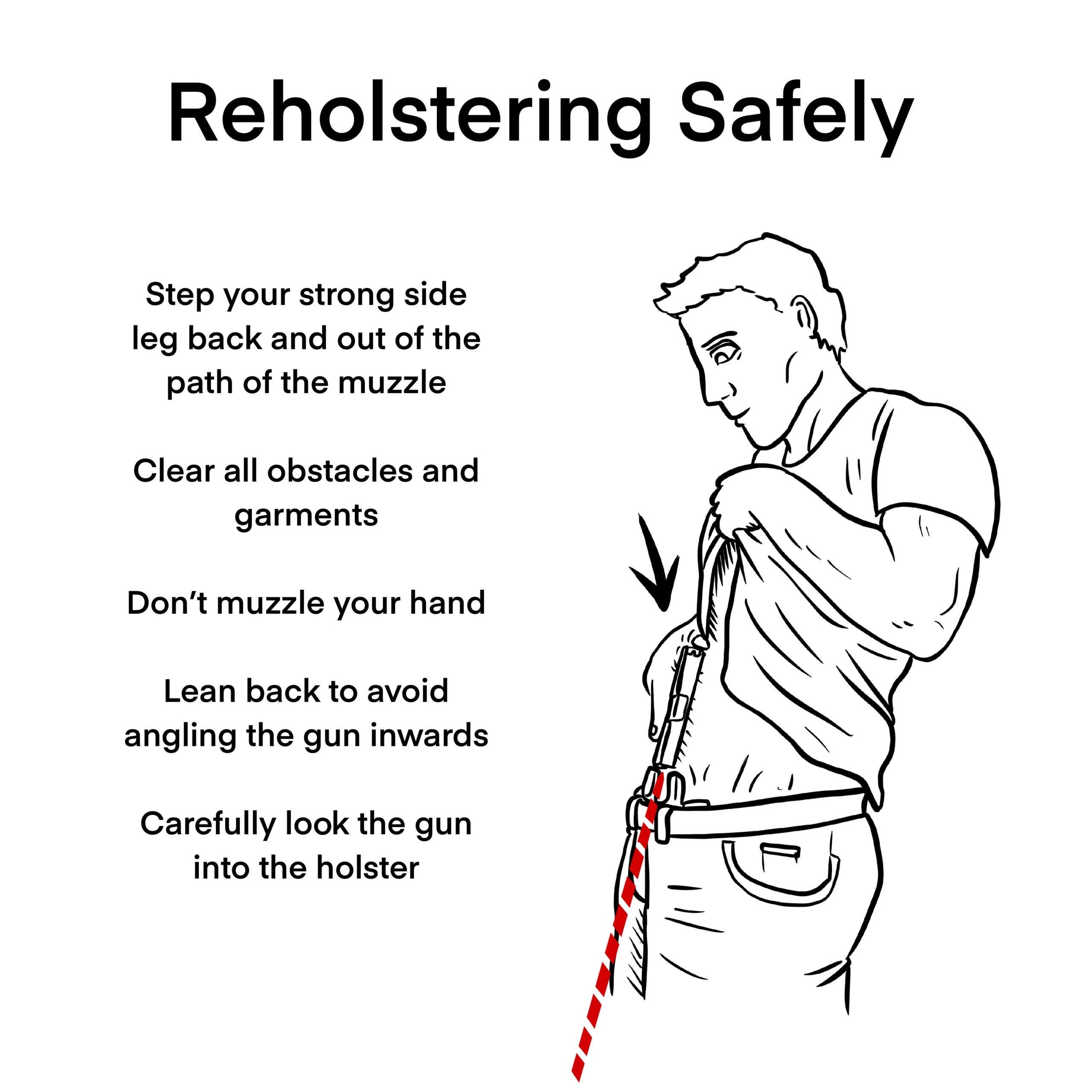 \\r
\\r
\\r
\\r
\\r
\\r
\\r
\\r
\\r
\\r
\\r
\\r
A person\\u2019s sweet spot is highly individual, and is based on size, body shape, and clothing drape.
Teaching points: Often, students will say, \\u201cI don\\u2019t have a sweet spot. I\\u2019m too fat/thin/round/square etc.\\u201d This is not true. Everyone has some areas of the body which are better than others for concealment. Help your students understand that concealment is a skill and a process.
\\r \\r \\r \\r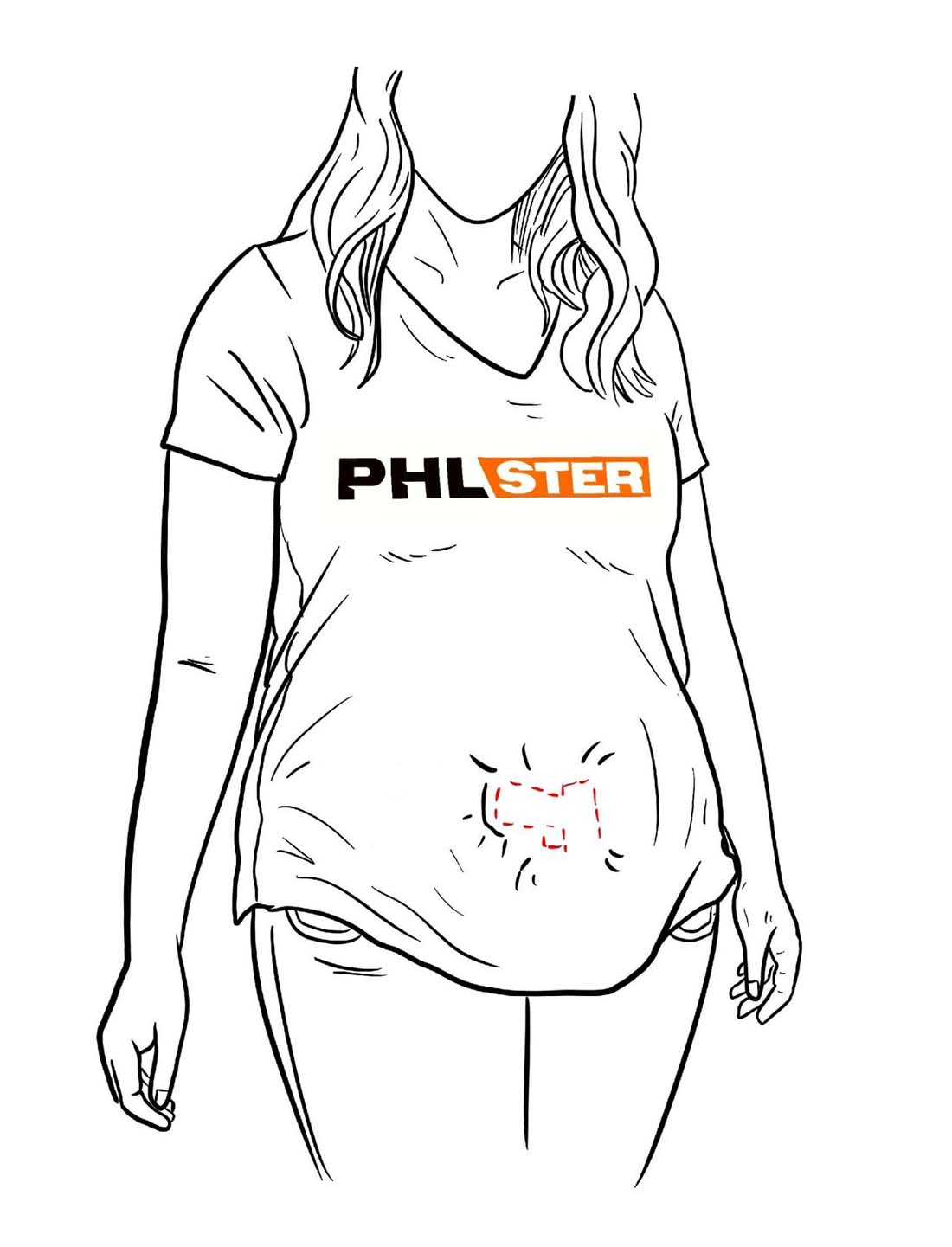 \\r
\\r
\\r
\\r
\\r
\\r
\\r
\\r
Once the gun is in the ideal location, the next trick is to get it to stay concealed (stay within the clothing envelope). Use the Poke and Check method to identify what holster features are needed for each body shape.
Teaching point: While many methods can be used to achieve concealment, prioritize methods that don\\u2019t compromise grip access or consistency (unless you have no other choice).
Once you know where you need the gun to go, use the Basic Concealment Mechanics to get it to stay there. This link contains all of the Concealment Mechanics resources in one place.
\\r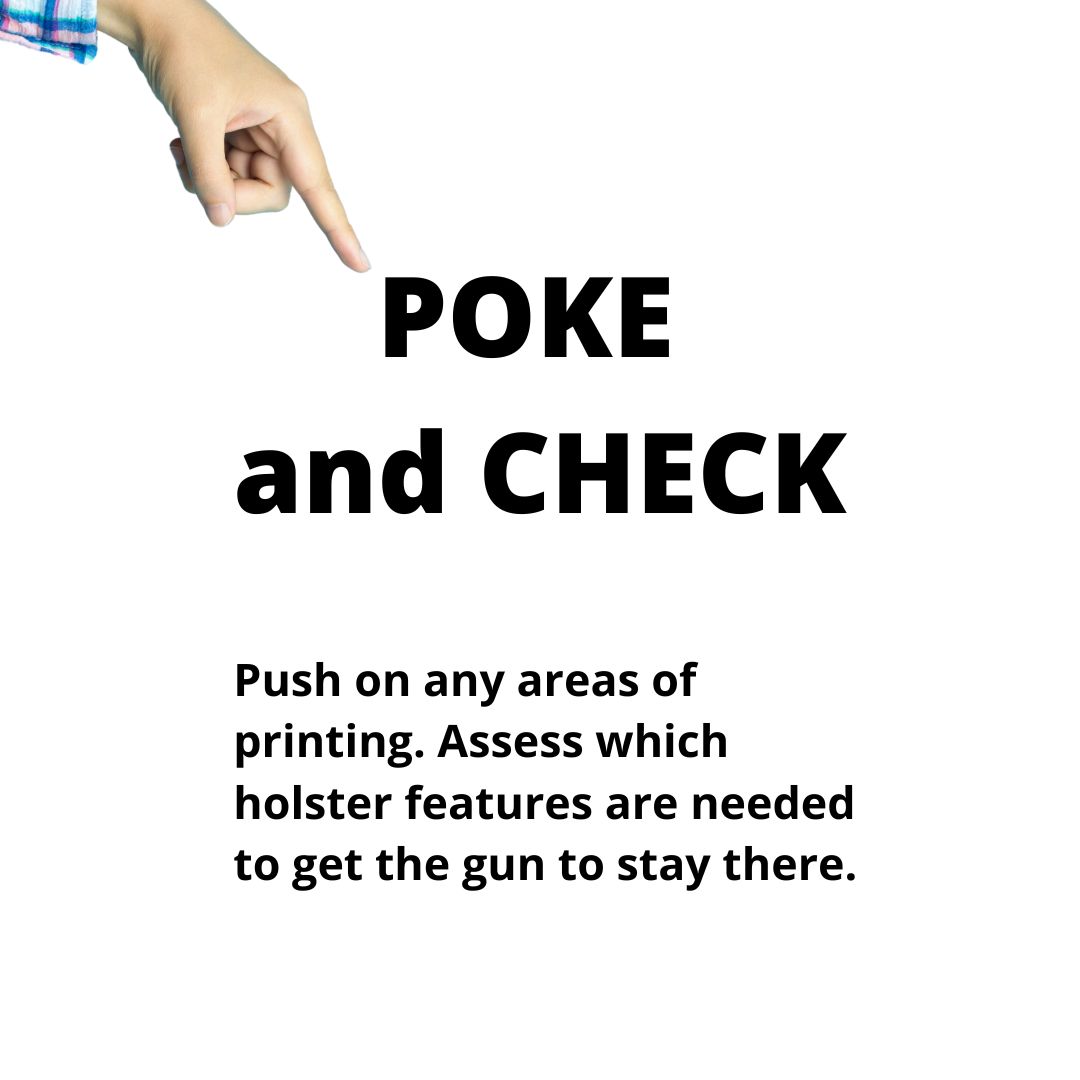 \\r
\\r
\\r
\\r
\\r
\\r
\\r
\\r
\\r
\\r
\\r
\\r
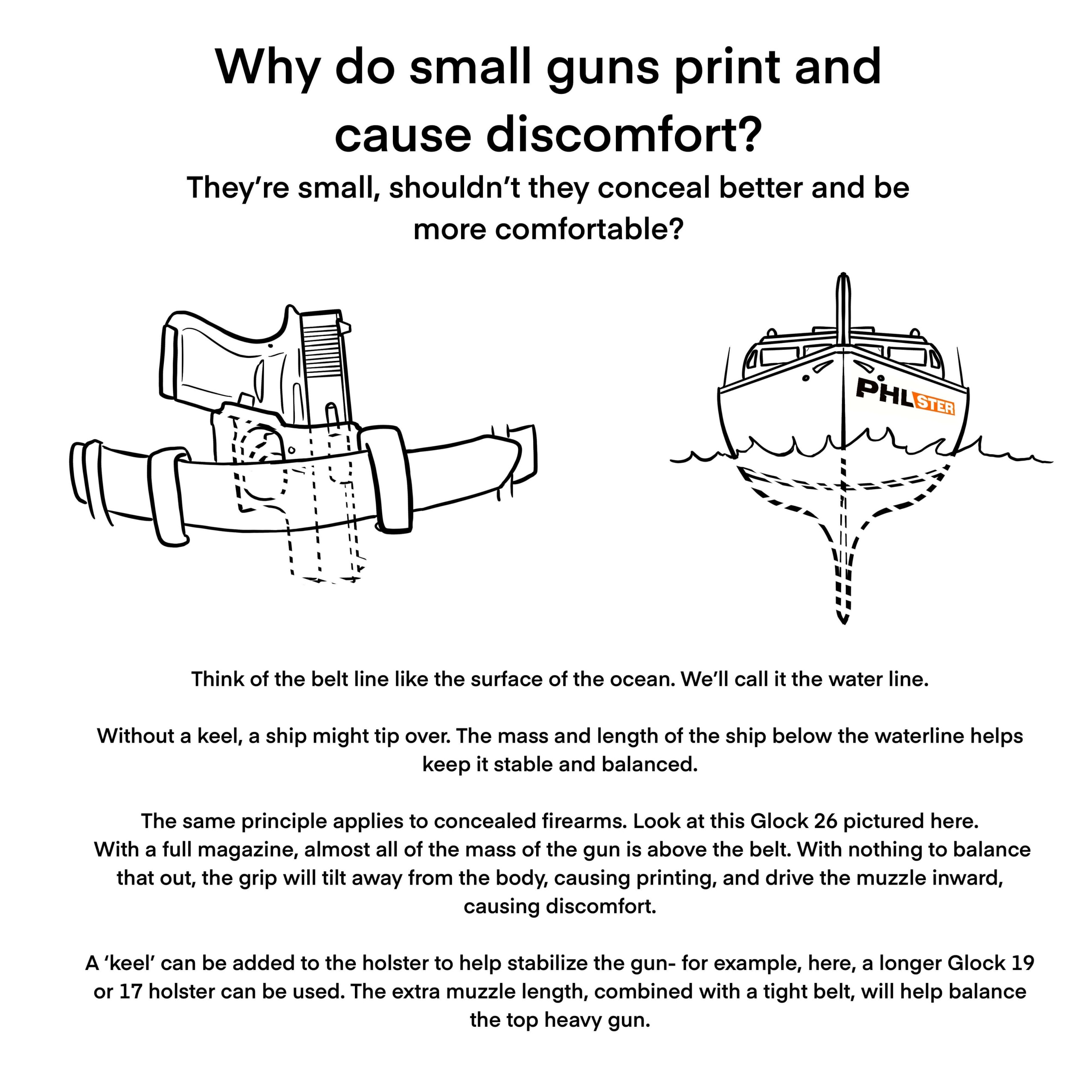
The goal is to cause the grip of the gun to rotate toward the body, so the entire gun lays flat in the sweet spot. To accomplish this, we take belt pressure and convert it to grip rotation with different holster concealment features.
\\r \\r \\r \\r \\r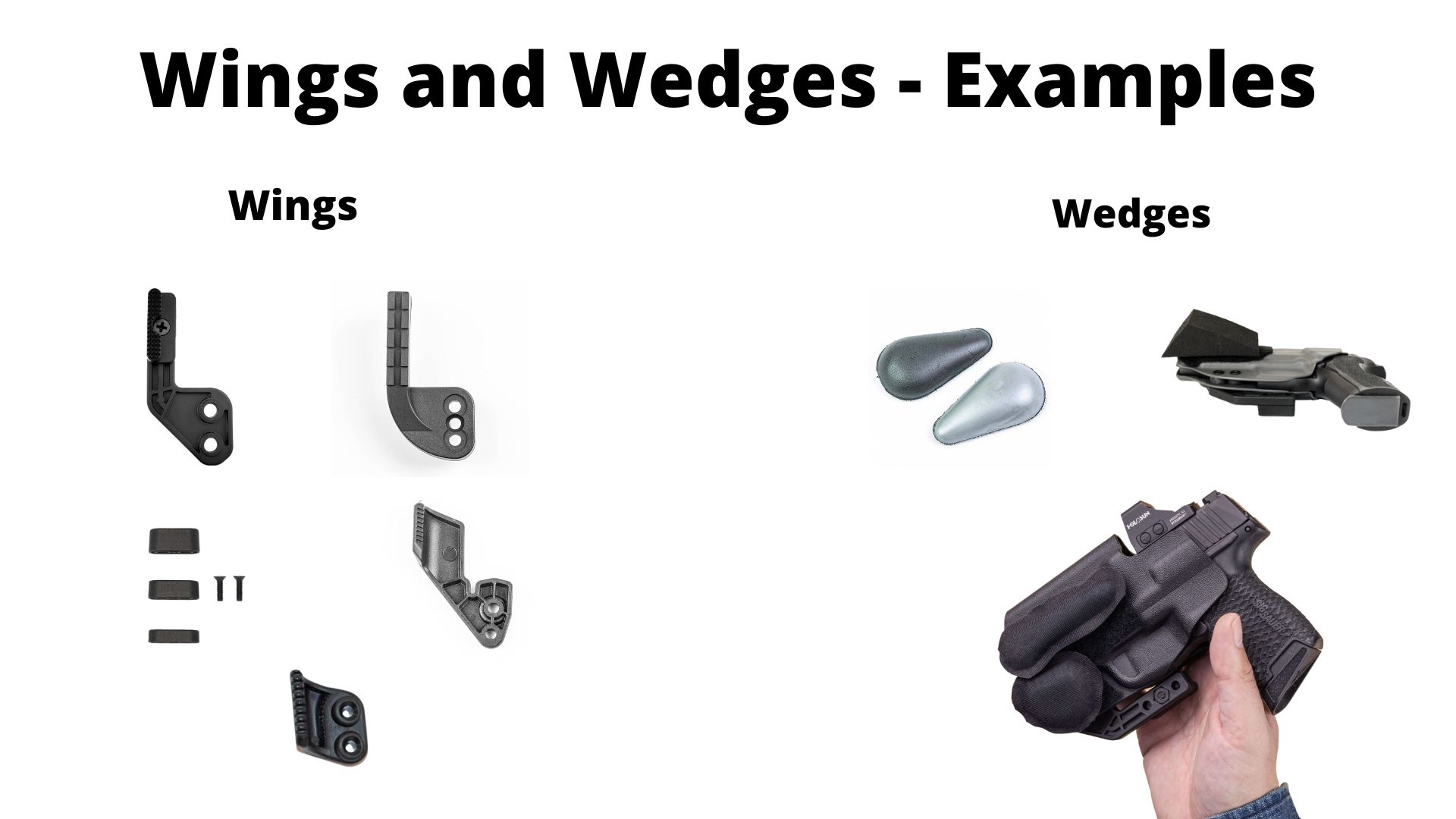 \\r
\\r
\\r
\\r
\\r
\\r
\\r
\\r
\\r
\\r
The goal is to cause the grip of the gun to rotate toward the body, so the entire gun lays flat in the sweet spot. To accomplish this, we take belt pressure and convert it to grip rotation with different holster concealment features.
\\r \\r \\r \\r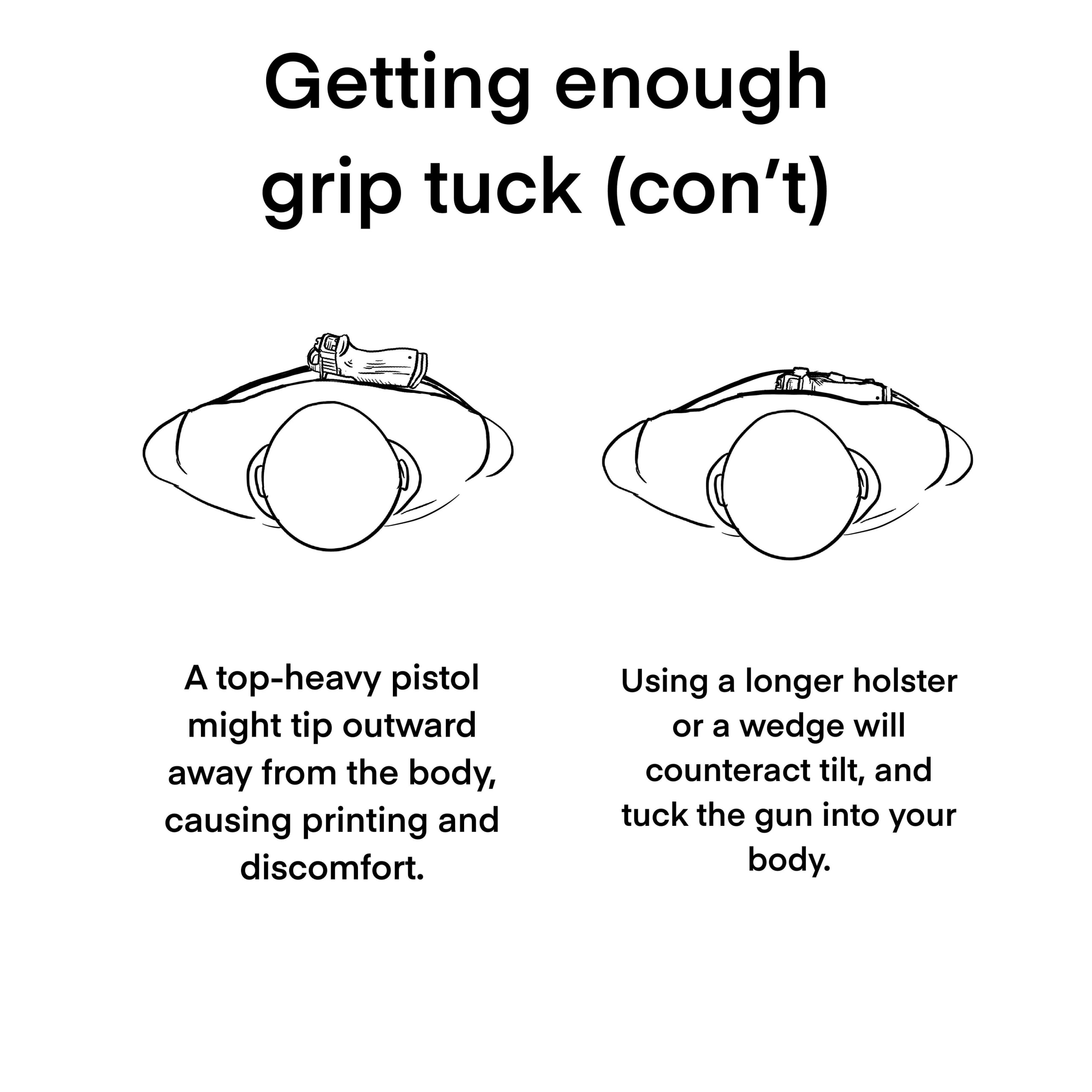 \\r
\\r
\\r
\\r
\\r
\\r
\\r
\\r
 \\r
\\r
\\r
\\r
\\r
\\r
\\r
\\r
\\r
\\r
\\r
\\r
Invest in foundation SKILLS before buying gear. Comfort issues are very individualized, and require skill and care to troubleshoot.
For detailed information on how to troubleshoot comfort problems for yourself or your students, watch the full comfort video here.
\\r \\r
\\r
\\r
\\r
\\r
\\r
\\r
\\r
\\r
\\r
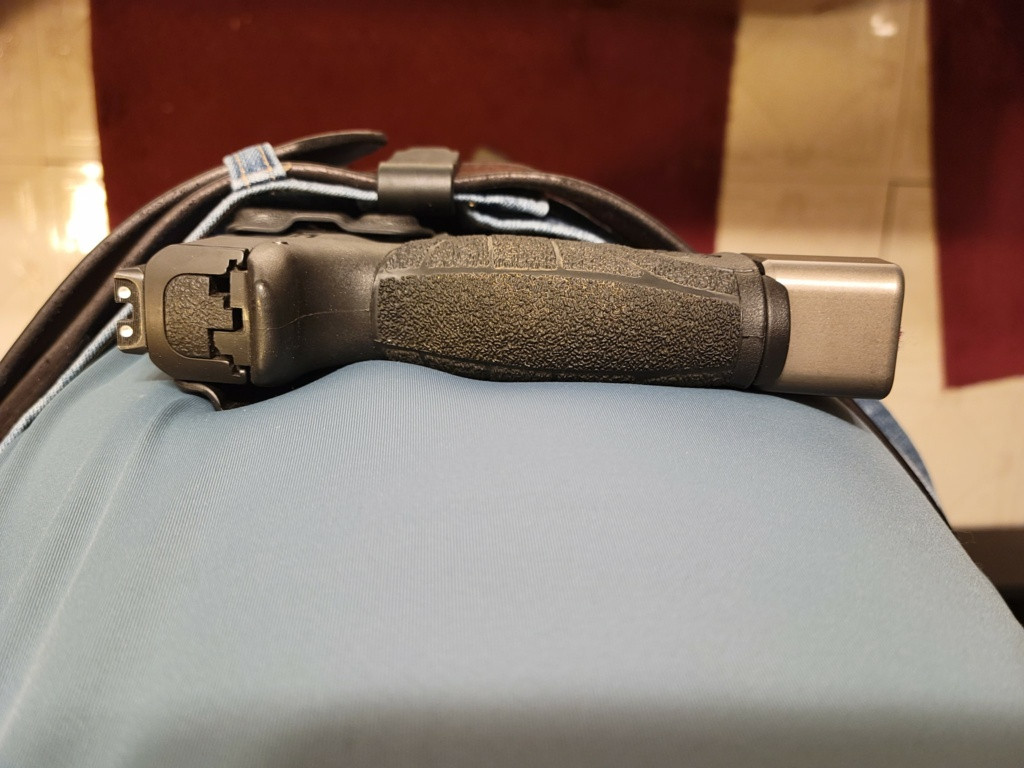
Teaching points: When the root causes of discomfort aren\\u2019t resolved, the person will not carry. They may not be able to articulate why, and may come up with excuses or alternate reasons, especially if they don\\u2019t want to look weak.
Create an environment for your students where they can talk openly and frankly about their bodies and their challenges. This gives them the best chance of long term success.
For more information, including solutions, watch the full video.
\\r \\r \\r \\r \\r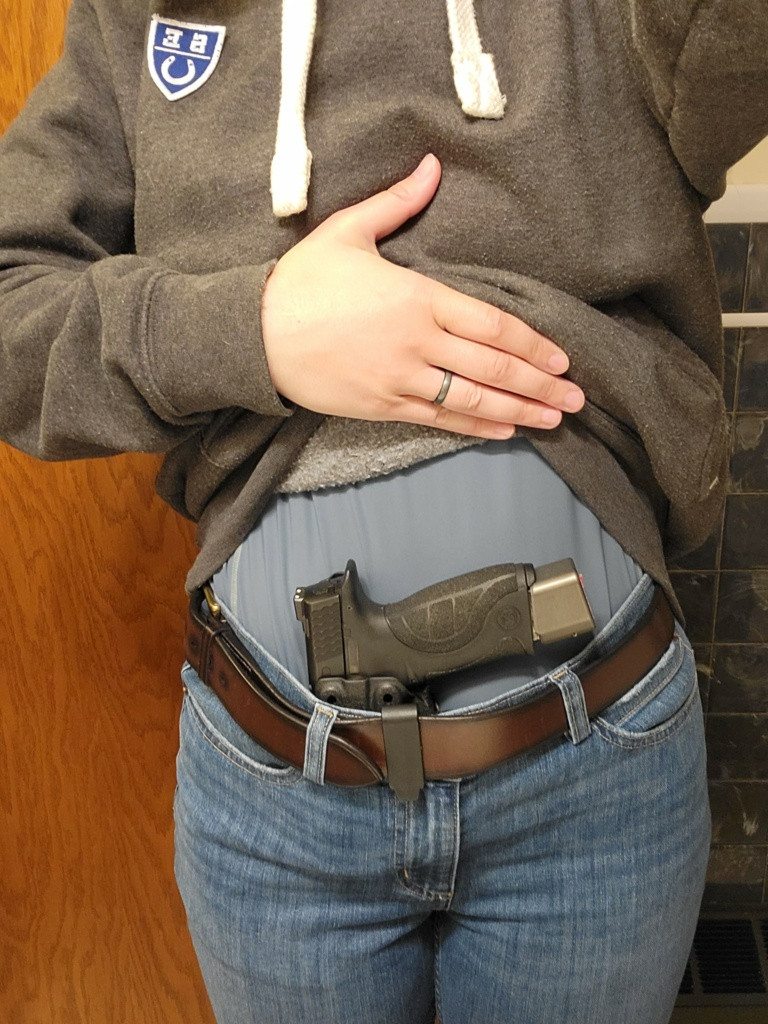 \\r
\\r
\\r
\\r
\\r
\\r
 \\r
\\r
\\r
\\r
\\r
\\r
\\r
\\r