
THE DECISION CYCLE
Posted by Tamara Keel on Feb 4th 2026
“Mindset" and "Awareness" are two massively over- and misused words in tacticool land.
For starters, as trainer Craig Douglas likes to point out, they aren't verbs. You can't awareness at a potential danger or mindset at a threat.
"I'm situationally aware!"
Great, that means you noticed the dude across the parking lot abruptly change the direction he was walking in reaction to your presence. That's a big pre assault indicator.
Now what?
"I've got combat mindset!"
Cool, cool...because he's got 'stick a gun in your face and demand your wallet mindset', too. What are you able to do about it?
To quote Annette Evans of On Her Own, "Awaring without skill only means you get to watch the train come at you from further away. Yay?"
The people who do well in these situations not only see the situation developing, they recognize it for what it is, have a plan to execute in that situation, and the skills available to execute the plan.
Understanding the OODA Loop
If that previous paragraph sounds familiar, it’s because you may have heard it presented in the context of the decision cycle as described by USAF Colonel John Boyd: Observe, Orient, Decide, Act. This is the oft-referenced but rarely explained “OODA Loop”, which Claude Werner, the Tactical Professor, is fond of pointing out is not pronounced “OOH-duh” but “Oh-Oh-Dee-Ayy”, per Colonel Boyd himself.
When I say “rarely explained”, I mean that it was several years after I first heard it used that I learned “orient” did not refer to turning to face the threat, but rather taking the information I had observed and orienting it inside the framework of previous experiences and information.
A Real-World Scenario: The Late-Night Gas Station
Let’s take the decision cycle and run a hypothetical scenario through it, examining the individual steps of the loop.
So, we’ll postulate that your employer rented a party room at a downtown watering hole for a Super Bowl watch party. It was a great, tense game that ran into overtime, and between that and an hour or so of socializing afterward, it was late when it got time to go home.
As you’re saying your goodbyes, one of your coworkers… a friend who you’ve hung out with after work fairly frequently …sheepishly asks if you’d play designated driver and drop them off at home because they’ve had a couple too many. Because you’re not a jerk and it’s only a few miles out of the way, you, of course, say yes.
You drop your friend off in front of their crib and, as you turn toward home, you feel an embarrassing twinge as the “Low Fuel” light on your car’s gas gauge illuminates. Normally, you’re the cautious sort who fills up when the needle gets down to about a third of a tank, but the unusual schedule of Super Bowl weekend has disrupted your regular routine.
Your coworker’s place is in a recently gentrified neighborhood on the near north side of town, and to get back to your regular route home is going to require traversing a few miles of surface streets through fairly sketch neighborhoods before you’re back on the main commuter thoroughfare that leads to your pad.
Still, you’re a prepared and trained individual, right? You’ve got a handgun and pepper spray, a flashlight and a centerline fixed blade knife; all the impedimenta of the “CCW lifestyle”, plus the training to use it effectively, so you’re not worried.
Step 1: Observe
You pull in at the first gas station near your coworker’s house, a few blocks into Sketchville, to top up your gas tank. As you do, you OBSERVE a few things.
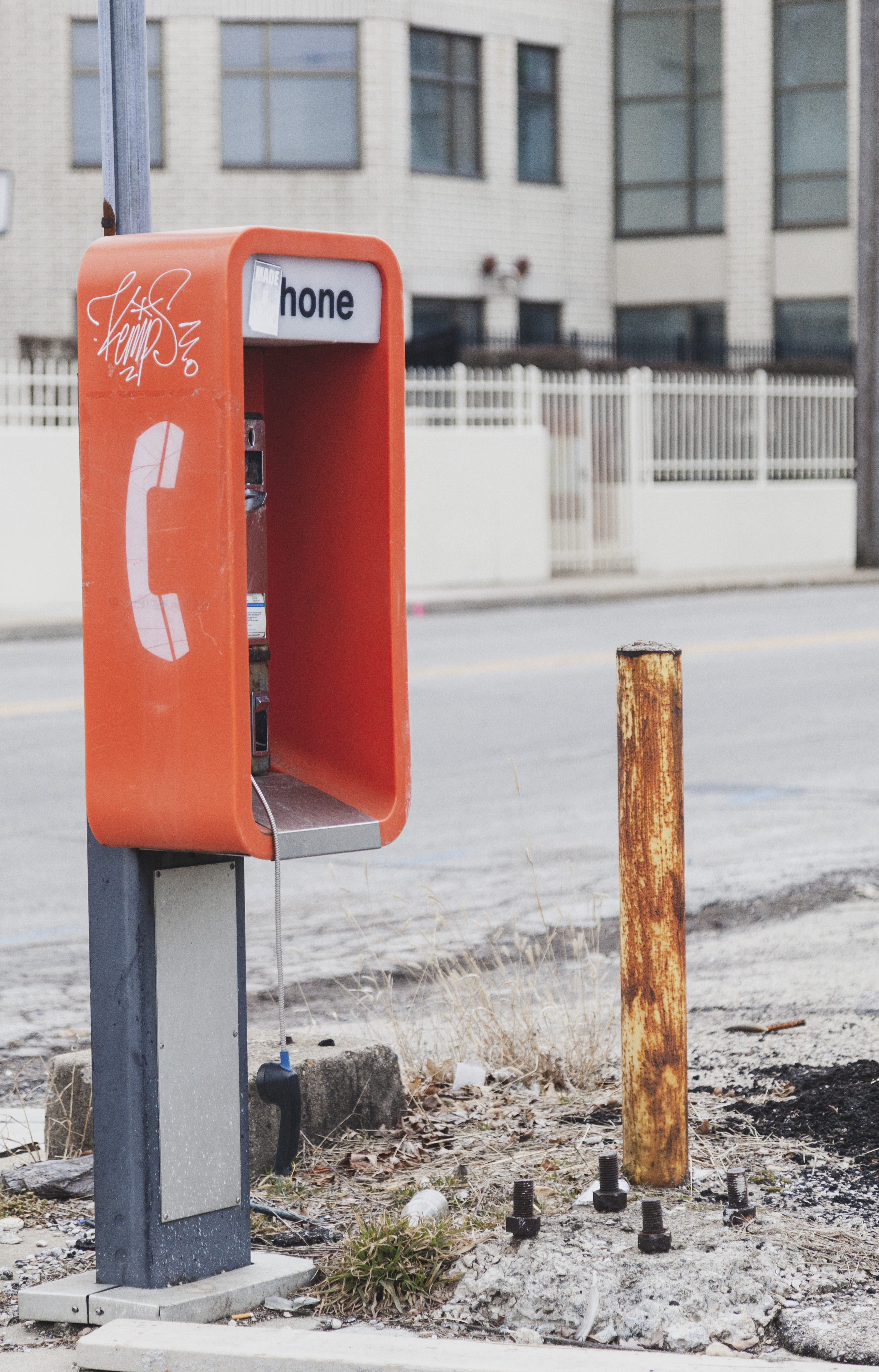
The pay phone is clearly long-broken. Further, the house of worship across the street has a security fence around it. Probably not the greatest neighborhood.
For starters, there’s a pay phone in the corner of the lot, but it’s obviously long out of service. Also, one nearby street light is out, so half the lot is dimmer than usual, but it’s hardly dark. Like most urban areas in America, there is plenty of ambient light, and the canopy lights over the pump are working, as are the floods on the convenience store's roof.
There are no other vehicles at the pumps (it’s a small city c-store, so there are only four pumps) and only one car in the lot, parked up against the building, as far away from the door as the lot will allow.
Inside the store, you can’t see any customers, but you can see the clerk behind the counter, apparently busy with his phone, playing Candy Crush or doomscrolling X or whatever. The only other humans visible are a couple guys out in front of the store, one of them smoking a cigarette, about fifteen feet from the door. As you pull up to the pump and park, one of them seems to be watching you while the other starts looking all around, everywhere but at you.
Step 2: Orient
Now you take the things you’ve observed and ORIENT them in the framework of information available to you.
The presence of a pay phone in the year 2026 is often an indication that you’re not in a great place. The fact that this one is clearly broken and hasn’t been repaired or removed tells you that this is indeed a sketchy neighborhood. This is reinforced by it being practically co-located with a non-working streetlight.
The lack of other cars isn’t super unusual in and of itself. It’s late on a Sunday evening, and it’s Super Bowl Sunday on top of that. Most people are not out getting gas tonight. The lone car parked far from the door most likely belongs to the employee behind the counter, and store policies generally require leaving the good parking spaces for paying customers.
The two guys in front of the store are far enough from the door that they could be employees taking a smoke break, but neither of them is wearing the uniform shirts of the convenience store chain. Further, it’s probably already third shift, and little gas stations like this usually only have a lone clerk on the clock overnight, and you’ve seen him behind the counter.
A final couple of key details are the fact that these two guys either live close enough to have walked here or else parked down the block somewhere, and also the way that one of them is very interested in your car while the other one is scanning everywhere else as though looking for cop cars or eyewitnesses.
Step 3: Decide
Now you take that observed information you’ve processed and DECIDE on a plan of action.
In this particular hypothetical situation, there are only a couple of realistic plans, fortunately, which keeps your decision tree nice and slim.
You could turn off the car, get out, and keep a careful eye on the two guys in front of the store while filling your tank and (hopefully) having enough leftover situational awareness to scan the surroundings in case there’s a third guy you didn’t notice.
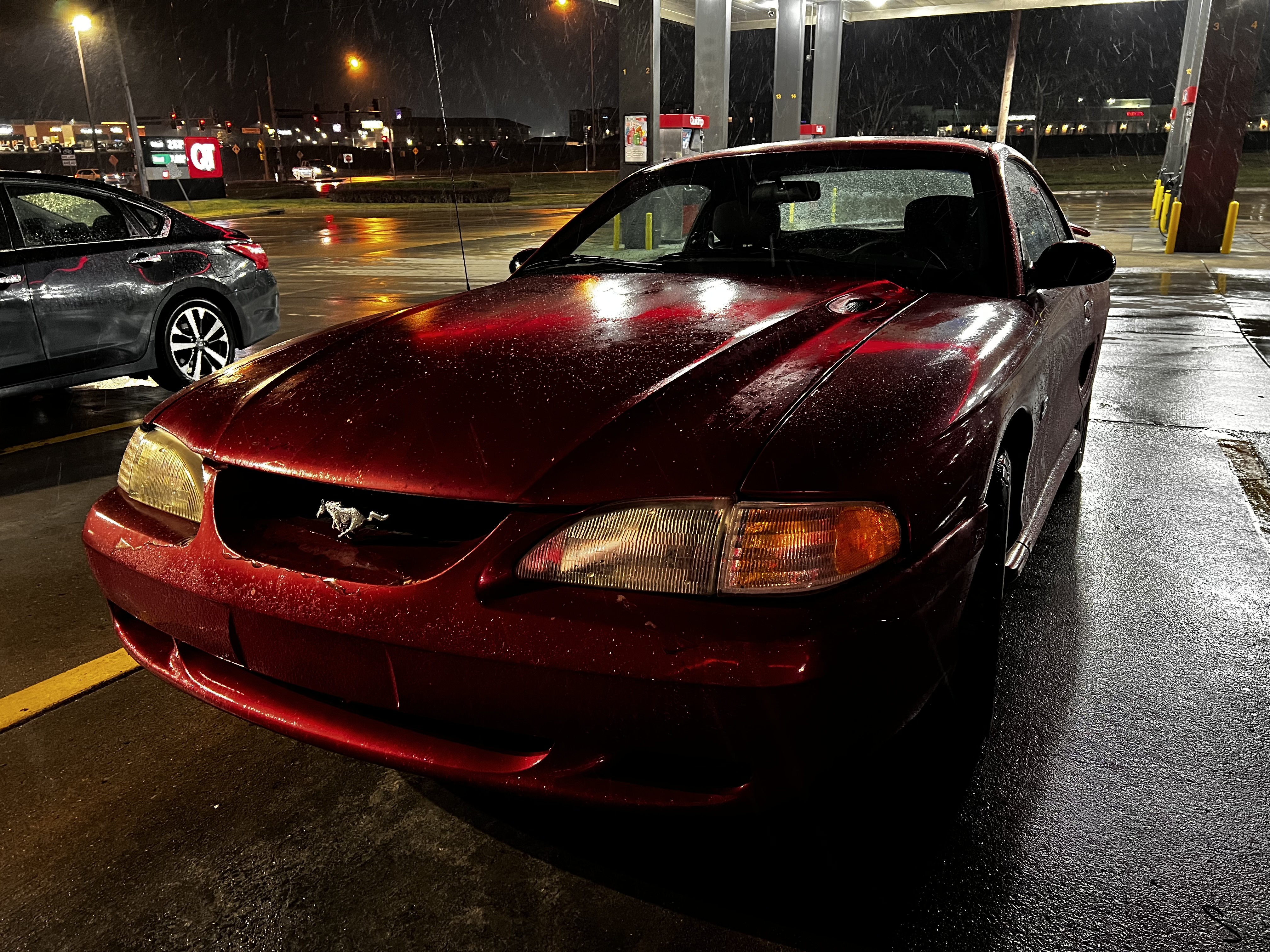
After dark, gas stations and big-box store parking lots are the watering holes on the Serengeti of crime. Why? That’s where the victims are.
Alternatively, you know for a fact that the “Low Fuel” light in your car comes on when there are two gallons left in the tank, and even though your car is an old V-8 Mustang, it still gets fifteen miles per gallon or more of range even in stop-and-go city driving. It’s only three miles to an intersection with three large, busy gas stations on the major commuter artery that has you halfway home already.
Step 4: Act
So with all that info, you ACT.
You put your car back into gear without shutting it off and roll back out onto the street, heading for a gas station that doesn’t feel like the setting for an imminent carjacking.
What? Did you think there was going to be a gun battle? Nah, those cost money, and besides, you can’t lose a fight you’re not in.
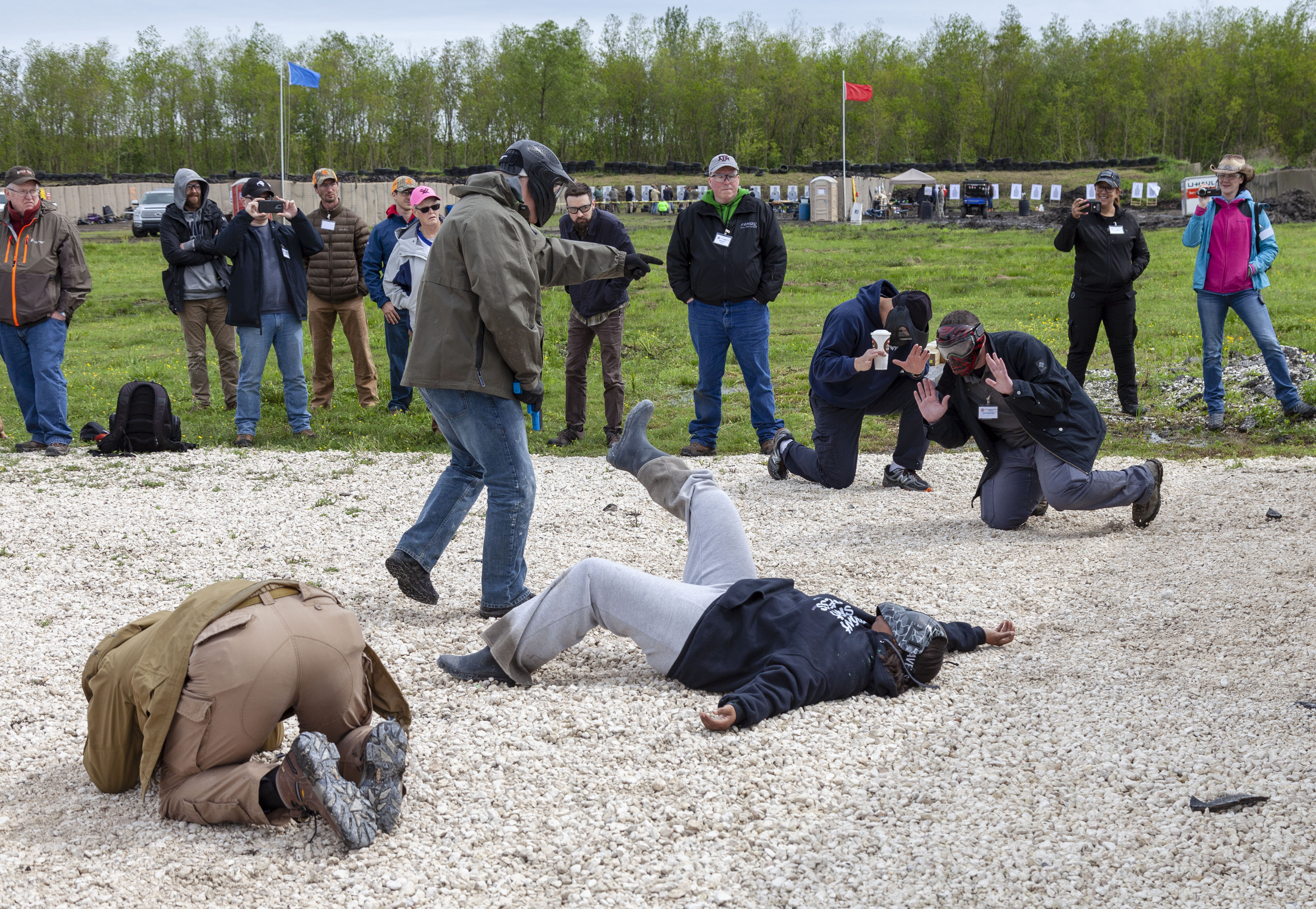
Force-on-Force training is the only safe place to experience a convenience store holdup.
Remember this: when you hear someone say, “They just came out of nowhere!” well, “They” really didn’t just come out of nowhere.
In the next column, we’ll start breaking down these individual steps.