
SEEING IS NOT OBSERVING
Posted by Tamara Keel on Jul 14th 2026
The first step in the decision cycle is Observing. This is analogous to the “situational awareness” that is often mentioned but rarely defined.
If it’s described at all, it’s with phrases like “Checking one’s six” or “scanning the environment”, but it’s entirely possible to look around and not see, and even seeing isn’t the same as observing. Reducing it to the simplest example, if you are lying on your back in your bed and you wake up and open your eyes, then photons are going to bounce off the ceiling and hit your retinas. You are looking at the ceiling, you are even seeing it, but you are not observing the ceiling, let alone the entirety of your room.
Knowing Where to Look
Observing an area, especially a transitional space like a parking lot through which you have to move, involves knowing where to look, which areas you need to scan and what priority they have, and what to look for while you’re looking there.
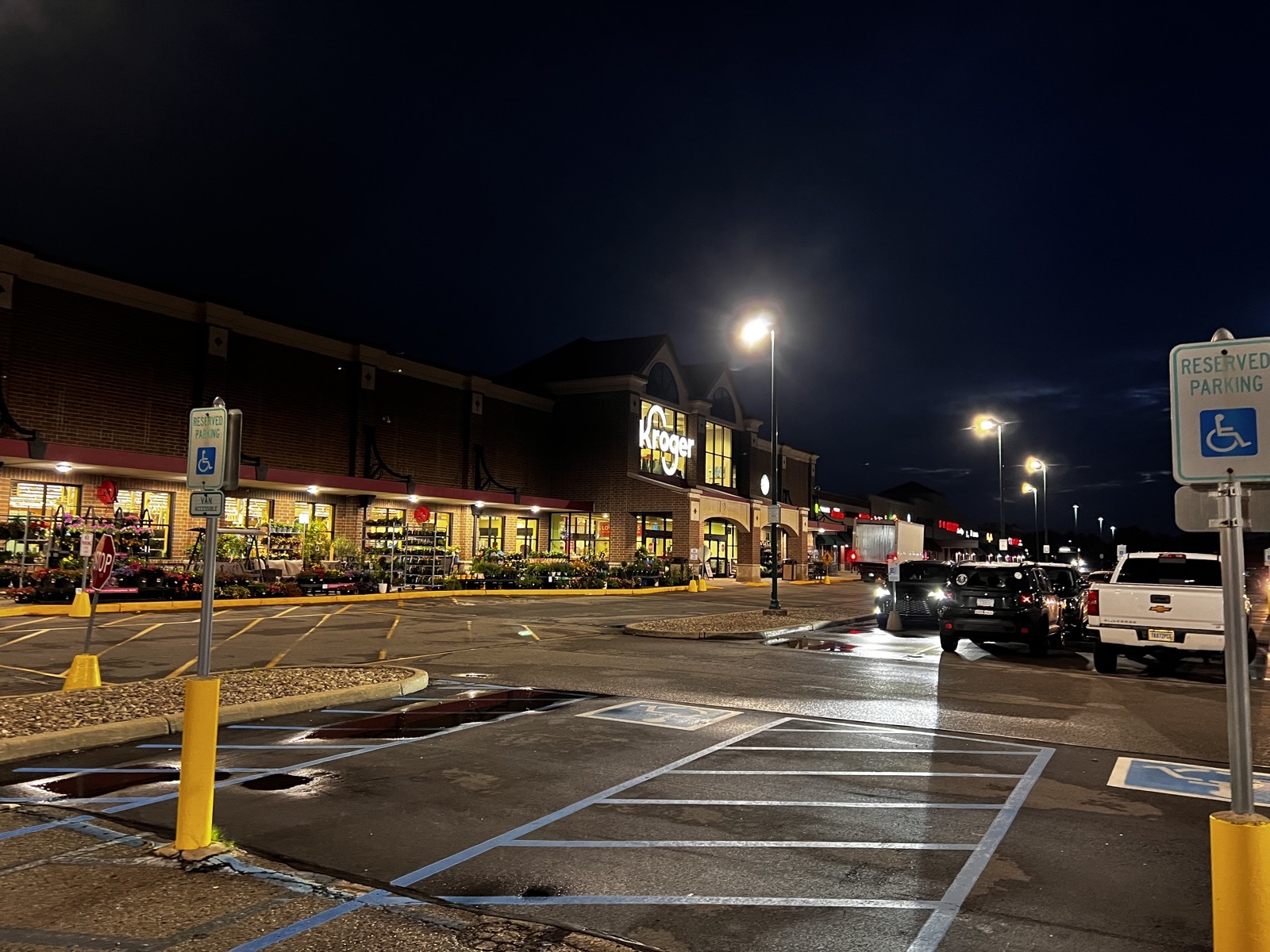
The nighttime parking lot of a big box store is a watering hole on the Serengeti of crime. Parking somewhere where you can clearly observe your surroundings can help.
Using the gas station example from the previous article, the first place you’d look would be immediately around the pumps; the part of the environment with which you’d need to immediately interact in order to gas up your car. Then you scan the parking lot and the sidewalks bordering it. Finally, you direct your attention to the interior of the store and the areas adjacent to the building. Essentially, the more immediate the area, the higher priority it has.
What are you looking for? Well, people mostly, unless you’re someplace where being assaulted by wildlife is a seriously plausible worry. More generally, you’re looking for people (and things) that don’t belong.
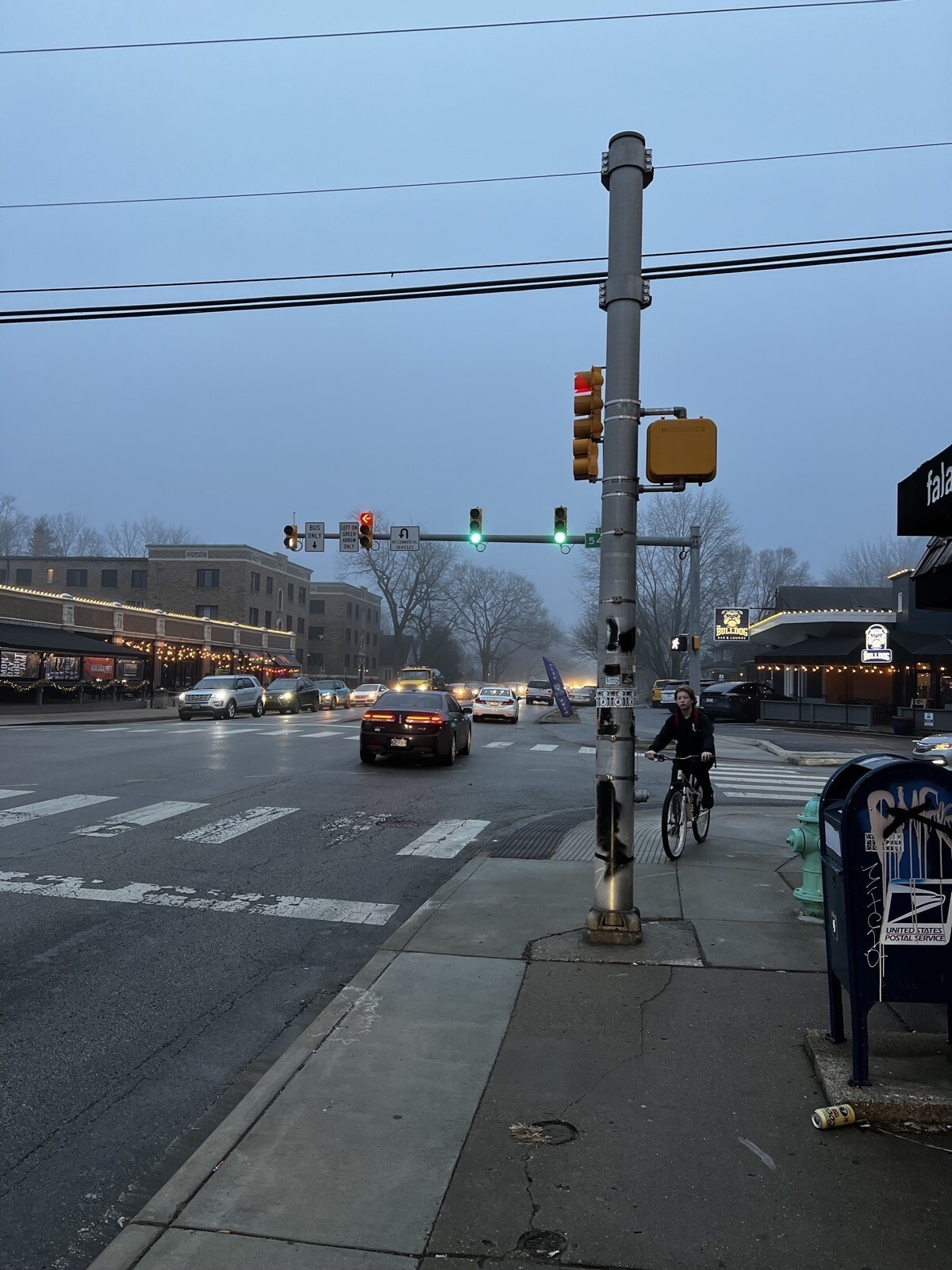
Going to a restaurant in the city for a holiday dinner requires noticing things that are out of place in that environment.
Task Fixation
The important thing while doing this is that you aren’t locking in on one specific person or thing. I don’t mean that you have to be sitting there jumping around like a hyperactive sand flea with your head on a swivel and “checking your six” like a cartoon parody of someone going through their first shoot house class, but it’s important to not get locked in on any one thing. That’s called “task fixation” and it’s a reason why sniper teams operate in pairs: the sniper’s job is essentially to be task fixated, and so that’s why a spotter is sent along.
To make it even more relevant, the earliest combat biplanes in World War One had a pilot and a second crew member, called the “observer”. Since this step in the decision cycle is about observing, that seems relevant. The pilot was very engaged in doing pilot stuff back in those days, and so needed a second person along to do the observing. You have to be your own observer, and so unless something immediately demands all your attention, you have to keep it moving around.
This means that you don’t set yourself up with something on which to fixate your attention while you are in transitional spaces. There’s a whole genre of viral videos of people walking along in public, so absorbed in a screen that they trip over curbs, wander into traffic, or stumble into fountains.
Nobody’s asking you to be some sort of technological monk or nun who eschews the electronic devices that, let’s face it, power so much of modern life, but at least wait until you’re someplace reasonably safe to do so. Not only is walking through a parking garage with your nose glued to your smart phone tying up your attention and preventing you from being a good observer, it can also attract the wrong kind of attention.
Just like you are supposed to be observing, so is your hypothetical potential assailant, and a person moseying through a public space with their attention obviously focused on a phone is sending a signal equivalent to a limping gazelle on the plains of the Serengeti. It’s broadcasting a transmission that reads “This person’s police report will read ‘I don’t know, the mugger just appeared out of nowhere’.”
Speaking of attention-absorbing devices that also transmit unwanted signals to potential bad guys, if you’re a member of the Millennial or GenX generations you no doubt remember the early 2000’s Apple ad campaign for the iPod.
If you don’t, it was absolutely iconic, featuring black silhouettes of people grooving against brightly colored backgrounds and you knew it was an iPod ad campaign because the bebopping silhouetted figure was holding a white iPod in their hand with the distinctive white cables leading to the device’s earbuds.
Those white earbud cables were so iconic and so visible that my roommate at the time and I jokingly referred to them as “target indicator wires”. If you were a nefarious actor lurking along a jogging path or city street and saw someone approaching with those white cables dangling from their head, they could be reasonably certain that they were effectively deaf to their surroundings and wouldn’t hear the approach of a potential attacker.
Observing With All Your Senses
This raises another point! Namely, that observing is not only a visual task, but rather one that involves all your senses.
If you are that jogger heading down that path, not only should you be using your eyes to scan the environment around you, but your ears should be engaged as well. Not only is there a need to listen for a bicycle bell or faster runner behind you signaling “On your left!”, but also for sounds in the underbrush on either side of the trail.
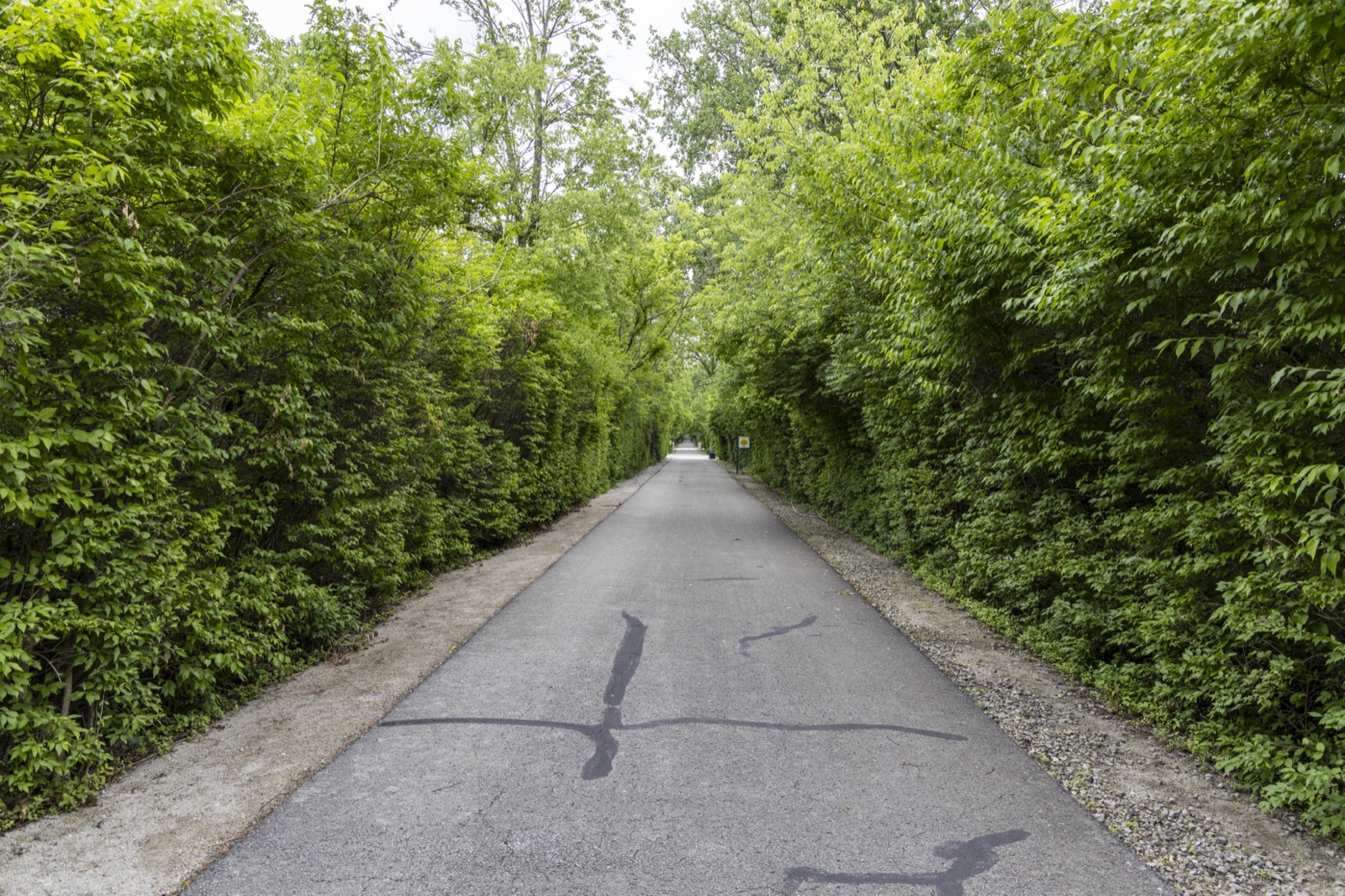
On a rail trail out in the ‘burbs, remember that your vision is not the only sense you use to observe. Use your hearing and sense of smell, too.
Jogging or running time is often used by people to groove to some music or catch up on podcasts, but out in the wider world this is not a good idea, alas. “Oh, but I only put one ear bud in!”, but even then you’re giving up 50% of your total hearing, a great deal of audio spatial awareness, and risking a bit of mental task fixation. There’s a reason that most all states ban driving with headphones, after all. If you just gotta exercise with your own personal soundtrack, it might be worthwhile to look into investing in a treadmill or a gym membership.
Not only is hearing a component of observation that’s as important as seeing, so is the sense of smell.
I don’t mean to sound like an over-the-hill GenX’er here, but the weed sold these days is strong enough that two or three tokes would kill a 1930s jazz musician… Okay, I’m exaggerating but there is a distinct aroma that comes with the current cultivars of marijuana that’s hard to miss. If you are jogging down that aforementioned trail and you’re all alone and you suddenly get a strong whiff on the breeze that smells like someone wrapped a roadkill skunk in ten feet of hemp rope and set it on fire… then, no, you are not alone. Someone’s nearby, and they know where the dope is.
Another sense involved in observing that’s not often referenced is touch.
Staying on the Net Indoors
Now, I want to be clear here that I’m not one of those people who thinks that a modern suburbanite concealed carrier in the USA needs to treat every trip to the local fern bar like it’s dining in a saloon on the main drag of Dodge City back in Wild Bill’s day. You don’t have to put your back to the wall and keep an eye glued to the door; it’s okay to read a book or check your email over lunch (heck, much of this column was typed on an iPad in a neighborhood pub) but don’t completely check out of the net while you’re in there.
In most indoor spaces, unless they’re large and you’re seated a long way from the door, you will feel when the door opens. Especially in winter in cooler climes, because the brief change in air pressure will be accompanied by a cool breeze of outside air. Take that opportunity to look up from what you’re doing and see what’s happening in your environment.
This is another environment where a lot of observing will be done via your ears as well as your eyes. When a hush descends or a raised voice is heard, that’s a cue to lift your head from your meal or your book and scan the room with your eyes.
Keeping good observation is a key to proper orientation, which we’ll cover next month.
About the Author
Tamara Keel has spent more than 15 years as a dedicated student of the defensive handgun, logging over 750 hours of formal training since 2008 under many of the most respected instructors in the field, including Massad Ayoob, Craig Douglas, Tom Givens, Pat Rogers, and Louis Awerbuck. Her coursework spans foundational marksmanship through force-on-force and entangled-fight training like Shivworks ECQC, along with appendix-carry-specific instruction from Spencer Keepers and Scott Jedlinski. Her writing on firearms and concealed carry has appeared in Recoil, Shooting Illustrated, American Rifleman, and USCCA’s Concealed Carry Magazine, among others. She writes for PHLster’s education library, bringing a daily-carry perspective grounded in training rather than theory.