
What Size Holster Wedge Do I Need With a Belly?
Posted by Jon Hauptman on Oct 26th 2026
If you carry appendix with a belly, you will usually need a bigger holster wedge than a thin carrier. Measure it yourself with a folded sock before you buy, and fix your carry position first, because a gun that sits too low needs far more wedge than it should.
Why a belly changes the wedge you need
On many bigger bodies, the belly grows forward and down. Below the peak, it drops off steeply toward the groin. A gun that sits on that slope tips its grip out and pushes its muzzle in. A holster wedge fills the gap between the muzzle and your body. It tucks the grip in.

Step 1: Move the gun before you size the wedge
The most common problem is a gun that rides too low. A belt under the belly pulls the holster down onto the steepest angle. At that angle, you need a lot of wedge just to fill the space. Try these steps first:

- Find your comfort boundaries. Sit down. Move your unloaded, holstered gun around your stomach in small steps. Where it touches your thigh is a boundary. Carry a bit higher than that.
- Look for drape. Put the gun where your shirt hangs away from your body. Avoid places where the shirt is tight across your abdomen.
- Try off-center. A round belly may work near 1:00. A belly that projects forward and down often works better toward 2:00 or 3:00.
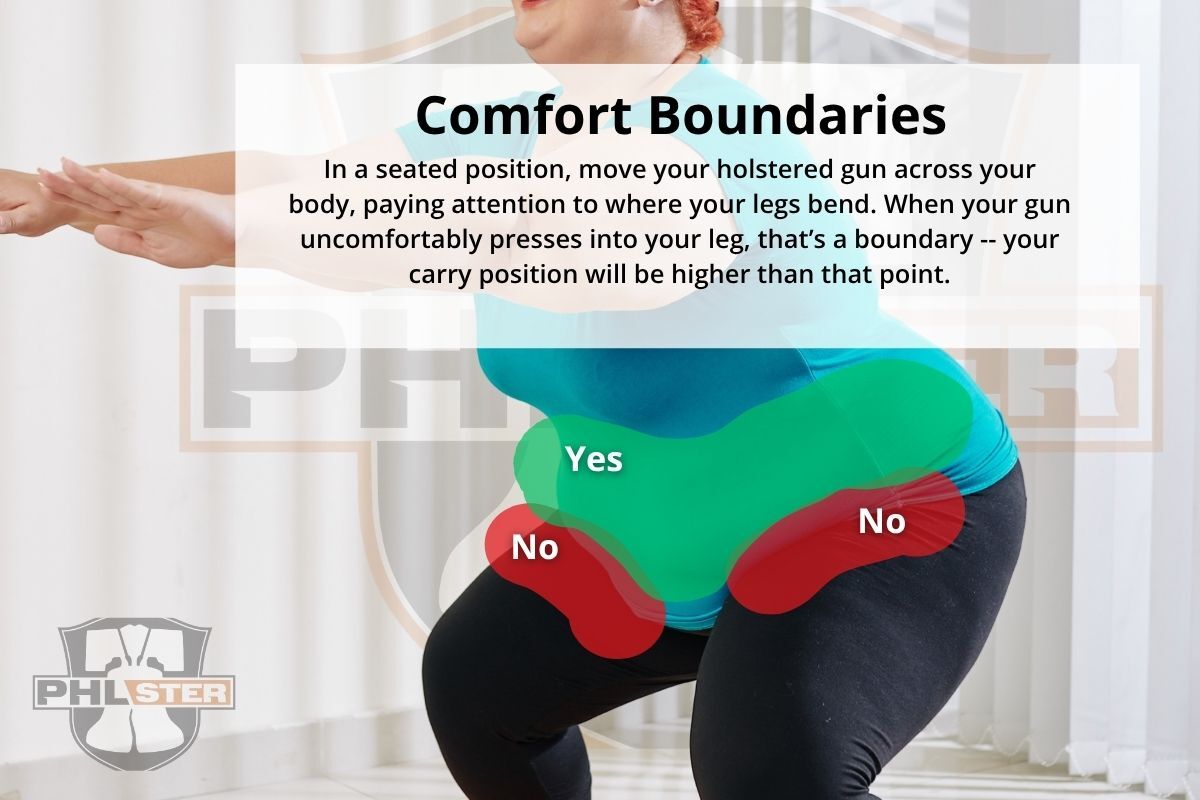
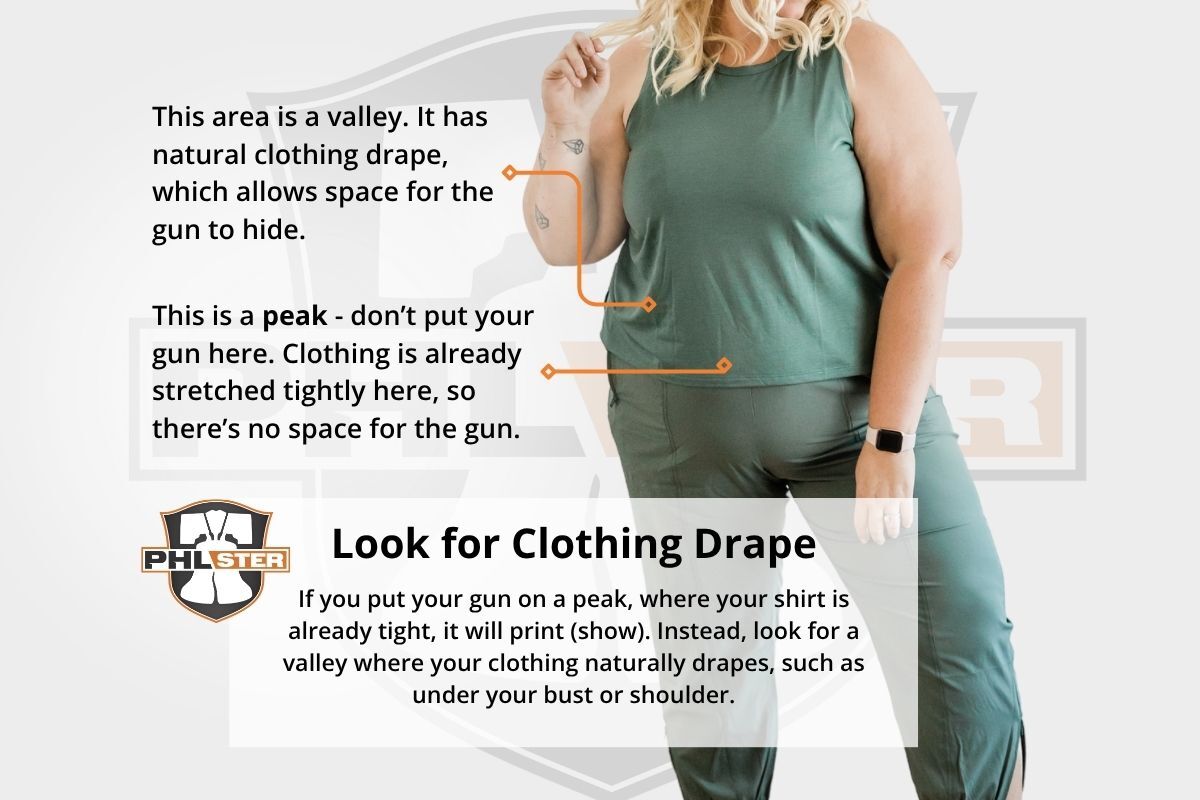
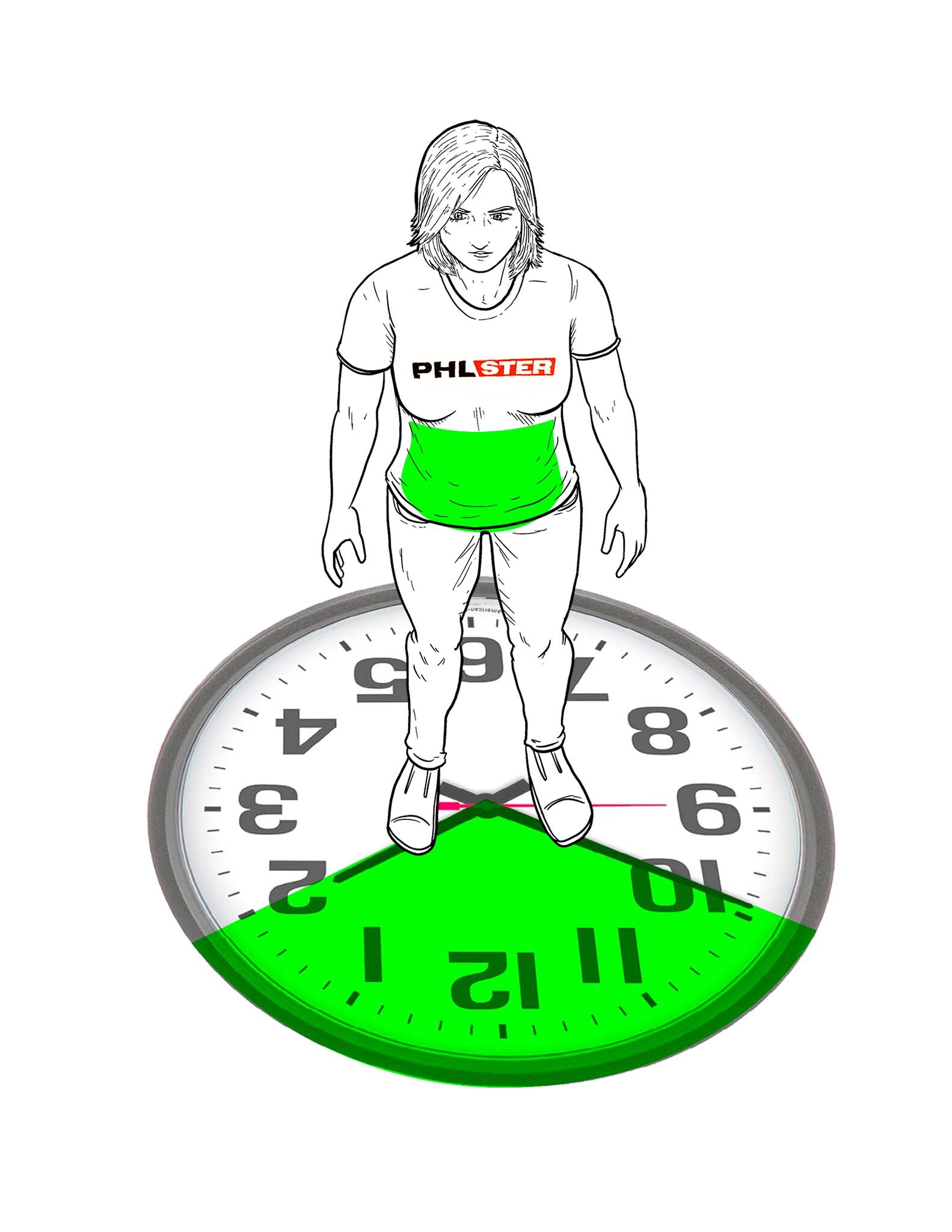
When the gun sits higher, more of it lies flat against you. Start by positioning the pistol in a location where it sits as flat against the body as possible. The more the muzzle tips inward, with the grip tipping outward, the more wedge you'll need. So, if you can start off in the right position, you'll need less wedge overall.
Step 2: Do the sock test
Use an unloaded gun in its holster. Fold a sock (or two) and put it between the muzzle end of your holster and your body. Add or remove folds until the grip tucks in and the muzzle is comfortable. Measure how thick the sock is. That is your wedge height. Some bigger carriers need about an inch. Some need three.
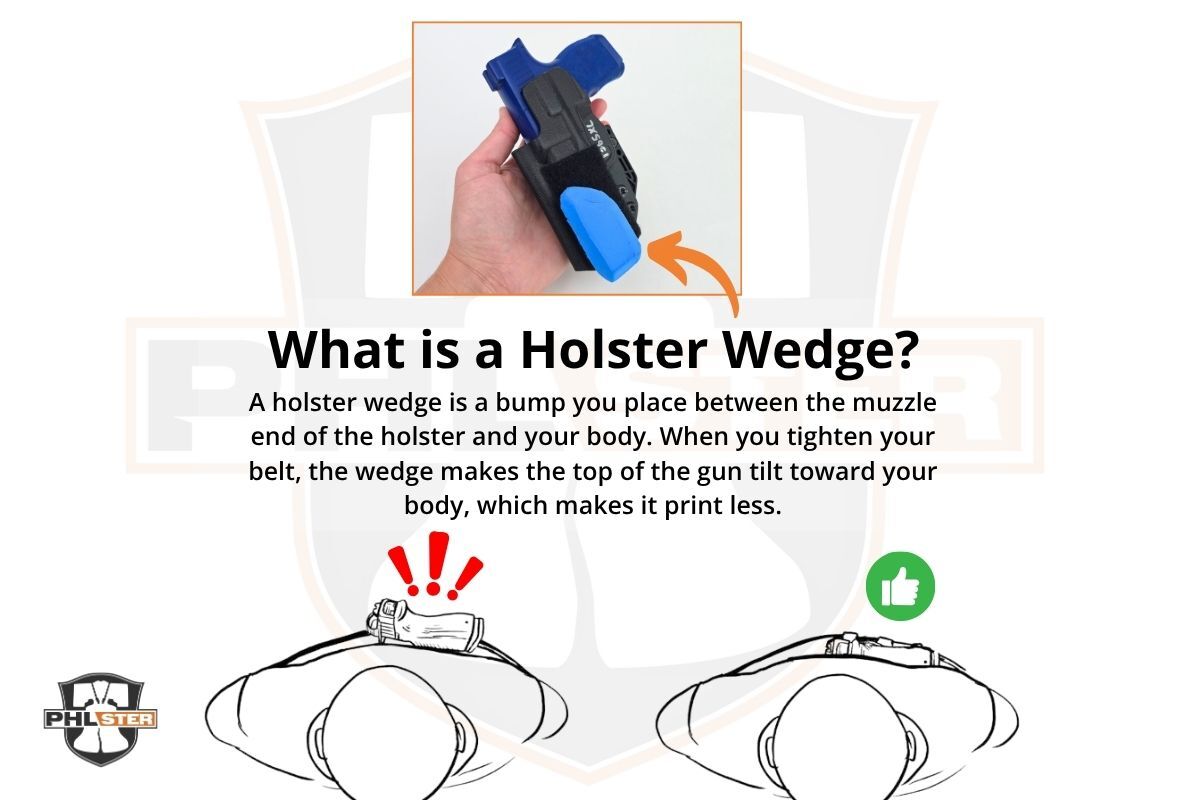
Step 3: Choose the wedge
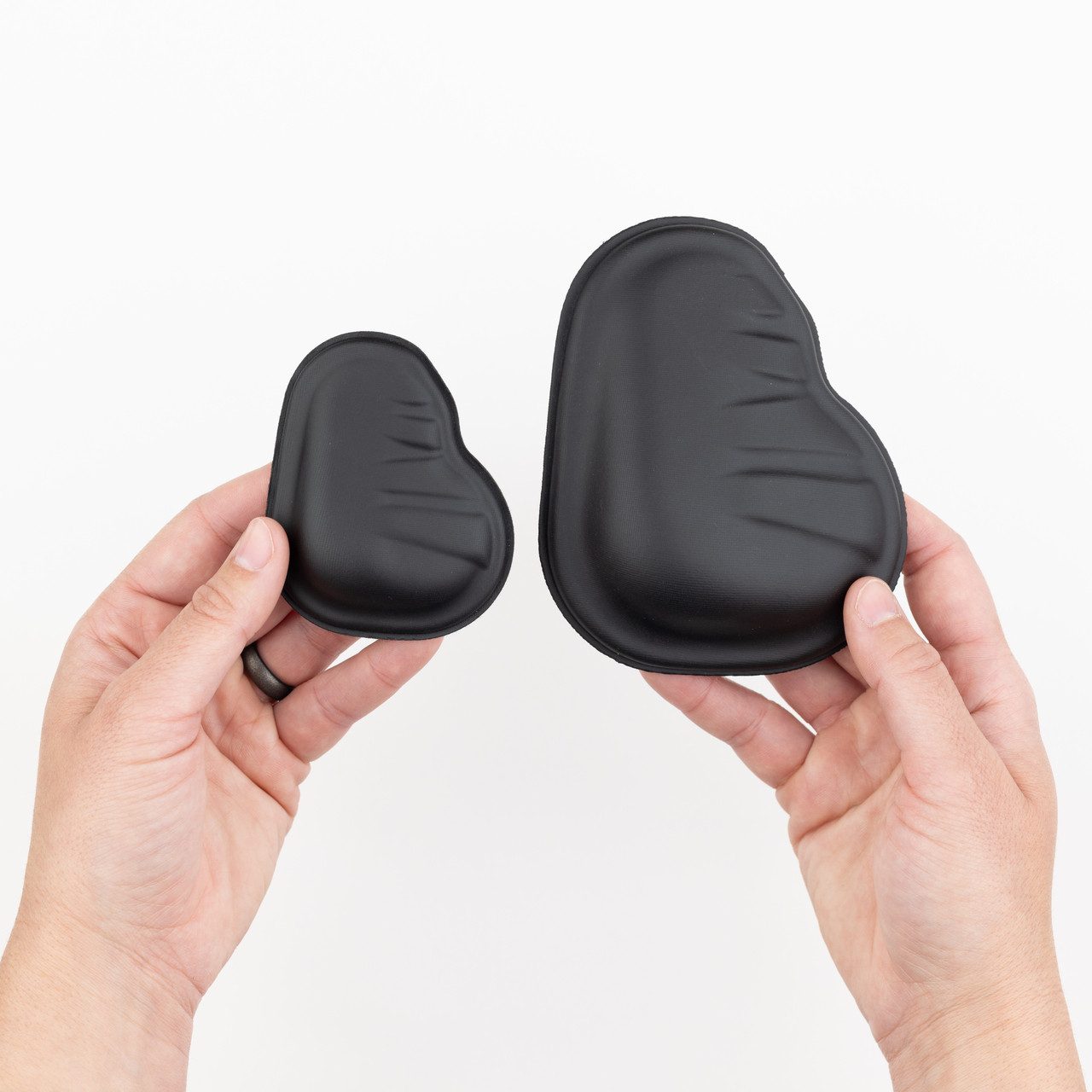
- About 1.5 inches or less, or a firm belly: our big-guy guide suggests the Large Wedge Rx as a starting point. Wedge Rx comes in Small, Medium, and Large. The Large is 1.25 inches thick.
- More than that: for big guys, we recommend a DIY wedge. Shape it with care. The wrong shape can fight your holster's wing and break the holster if you use a lot of belt tension.
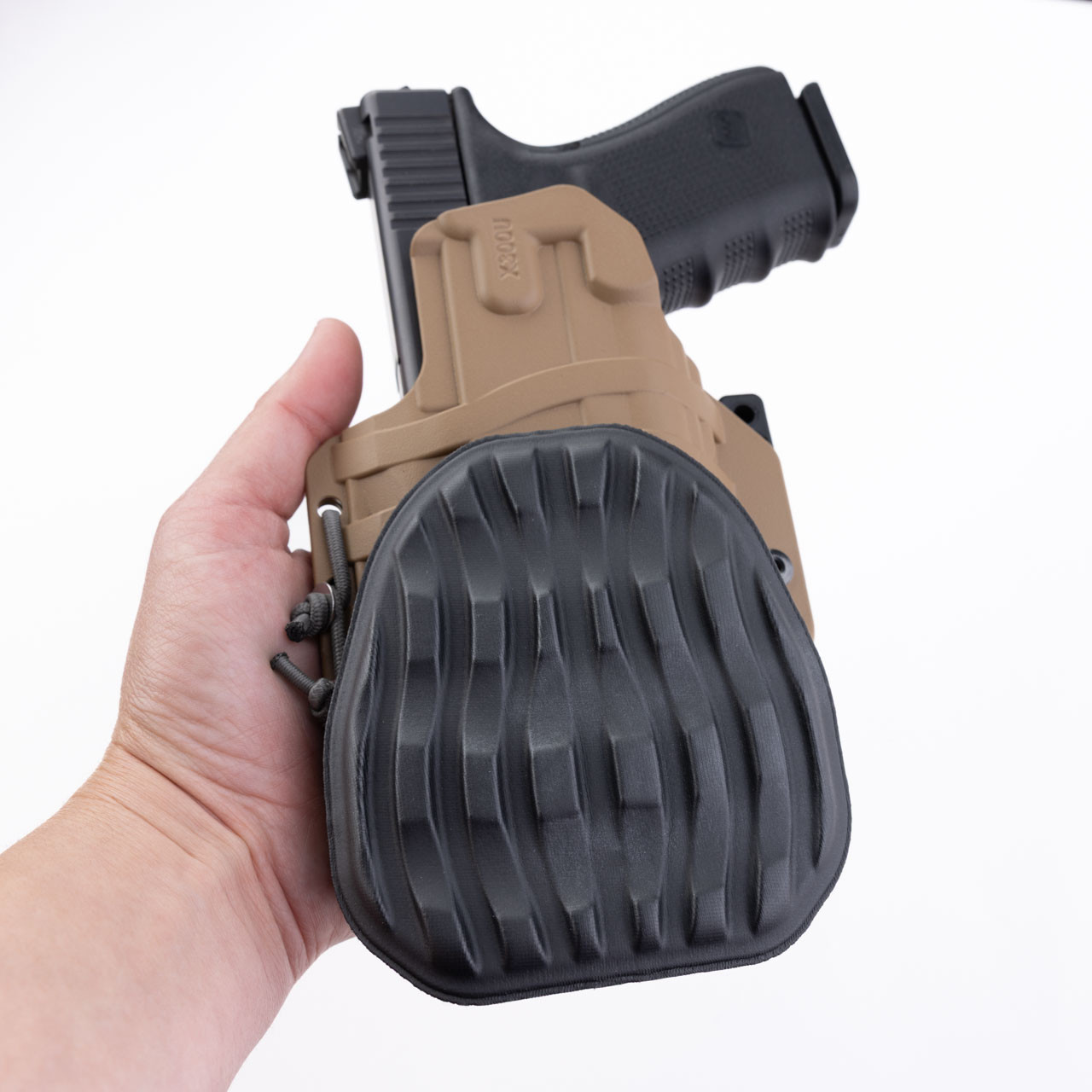
- If your concealment is fine but the gun is uncomfortable: a Flat Wedge Rx adds padding without changing concealment.
Signs your wedge is wrong
- Too big: your belt line bulges and the gun looks like a big lump under your clothes.
- Too high on the holster: the wedge cannot act as a pivot point, and the gun is pushed outward away from the body.
- The muzzle bulges through your pants conspicuously.
Who this is not for
If your gun conceals well and nothing is uncomfortable, you do not need a wedge. And if you cannot carry higher in your current pants, a holster that does not clip to your pants, like the Enigma, lets you place the gun on your body instead. However, it is not a magic solution. Jeans and a belt can still press on the muzzle, if only the muzzle is inside the waistband, and picking the right concealment sweet spot on your body still matters.
Keep Learning
- Appendix Carry for Big Guys
- What Is a Wedge
- Holster Wedge Buyer's Guide 2025
- Wedge Rx
- Flat Wedge Rx
- Enigma Virtual Try-On
About the author: Jon Hauptman, owner of PHLster. 16 years of holster making and design experience.